Face shape calculator: what face shape am I?
Grab a soft tape measure and a mirror. Four measurements tell you whether your face is oval, round, square, heart, diamond, oblong or triangle — and I will tell you where your blush, contour, highlighter and brows work hardest for that shape.
 Danny Rose
Makeup artist · New York
Danny Rose
Makeup artist · New York
How to measure your face shape
Short answer: measure your forehead, cheekbones and jaw straight across, then measure your face from hairline to chin. Compare which width is the largest and how long your face is relative to your cheekbones — that combination is your face shape. Pull your hair back, look straight into a mirror and keep the tape flat against your skin.
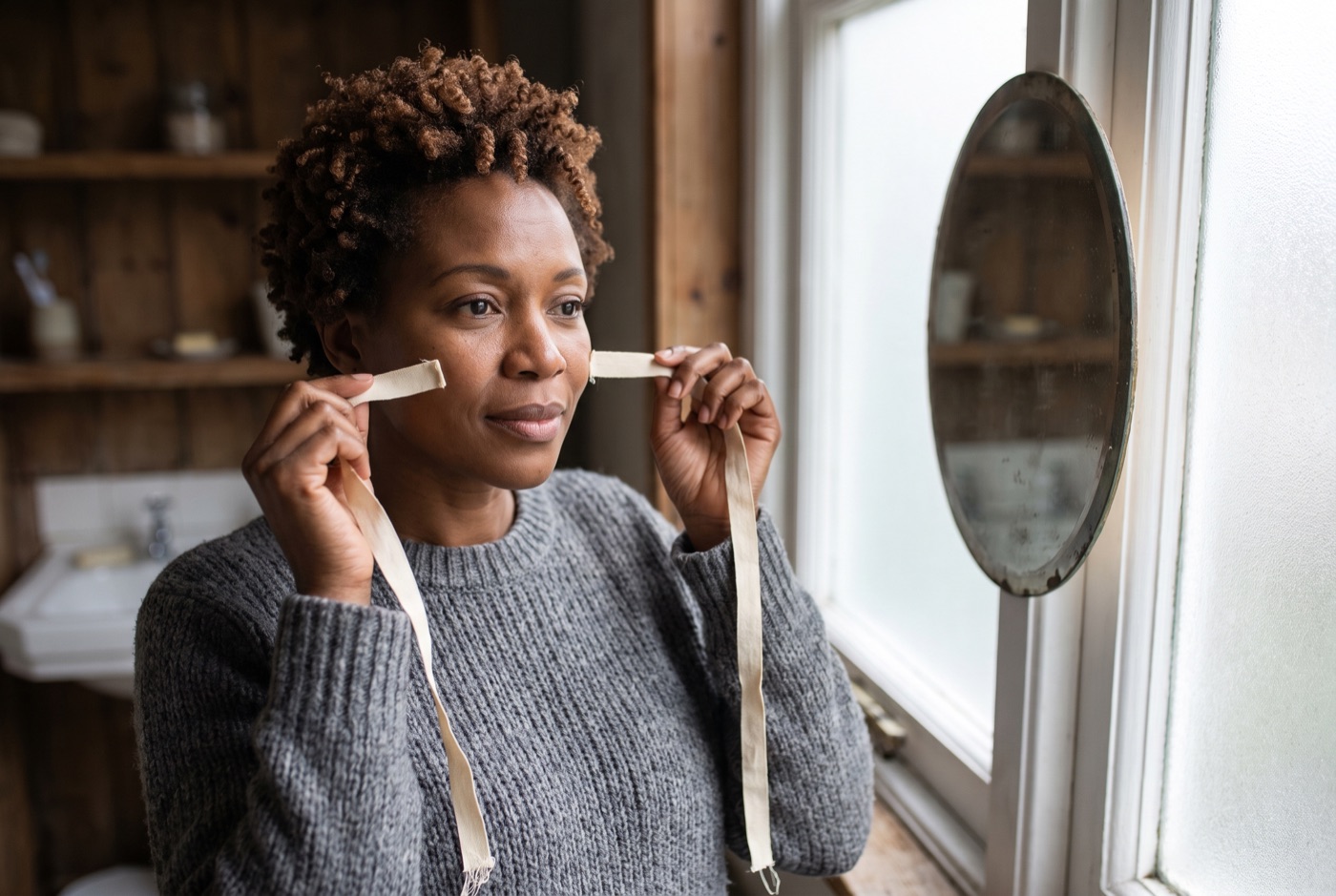
- Forehead width: across the widest part of your forehead, usually halfway between your brows and your hairline.
- Cheekbone width: across the highest point of your cheekbones, just below the outer corners of your eyes.
- Jaw width: straight across from one jaw corner to the other — the point just below each earlobe where your jaw turns.
- Face length: from the middle of your hairline straight down to the tip of your chin. If your hairline has receded, start where it used to be.
Some calculators ask you to measure your jawline from chin to ear and double it. I measure the jaw straight across instead, because a doubled jawline is almost always the largest number and makes far too many faces come out as “triangle.”
Face shape chart
These are the seven face shapes the calculator recognizes. Most faces are a blend of two, which is why your result may mention a second shape.
The best eyebrow shape for your face shape
Brows frame the face more than any other feature, so they are the easiest way to balance your shape without contour.
| Face shape | Brow shape that suits it | Why |
|---|---|---|
| Oval | Soft, gently angled arch | Keeps the natural balance |
| Round | Higher, defined arch | Adds length to the face |
| Square | Soft, rounded curve | Softens an angular jaw |
| Oblong | Flatter, straighter brow | Adds width, shortens the face |
| Heart | Rounded, low arch | Balances a wider forehead |
| Diamond | Curved, slightly fuller | Adds width at the forehead |
| Triangle | Longer, gently arched | Widens the upper face |
My pro tips
- Measure twice, and on a relaxed face. Smiling widens the cheeks and can turn an oval into a round result.
- Blush placement matters more than contour for almost every face shape — here is where it really goes.
- Between two shapes? Follow the tips for both. The overlap is usually exactly what suits you.
- Skip heavy contour in daylight. A soft blend and a little highlight on the high points does the job without stripes.
- Hair changes everything. Do the measuring with your hair pulled back, then decide on brows and blush with your usual hairstyle.
Frequently asked
What face shape am I if my measurements are all similar?
If your forehead, cheekbones and jaw are close to the same width, you are either square, round or oblong. Your face length decides it: a face noticeably longer than it is wide is oblong, while a shorter face is square with an angular jaw or round with a soft jaw.
What is the most attractive face shape?
There is no most attractive face shape. Oval is often used as a reference in makeup because its proportions are balanced, so many contour guides try to create the illusion of an oval. That is a technique, not a beauty standard, and every face shape can look striking with the right placement.
Can your face shape change?
Your bone structure stays the same, but your face shape can look different over time. Weight changes, fuller or hollower cheeks, and a softer jawline with age can move a face from one shape toward another, so it is worth measuring again every few years.
Where should I put blush for my face shape?
For most face shapes, blush works best high on the cheekbone and swept toward the temple. Round faces benefit from a more angled sweep, long faces from a more horizontal one, and heart-shaped faces from slightly lower placement on the apples to balance a wider forehead.