What’s my undertone? Take the 60-second quiz
Undertone decides which foundation label, blush and lipstick make you look awake — and it is the question I ask every new client first. Answer seven quick questions in daylight and you will know whether you are warm, cool, neutral or olive, with the shades to match.
 Danny Rose
Makeup artist · New York
Danny Rose
Makeup artist · New York
How to find your undertone at home: five quick tests
Short answer: your undertone is the subtle color beneath the surface of your skin — warm (golden, peachy), cool (pink, rosy), neutral (a mix) or olive (warm-neutral with a green or gray cast). It does not change when you tan. Do these tests on clean skin, in daylight by a window, and trust your first impression.
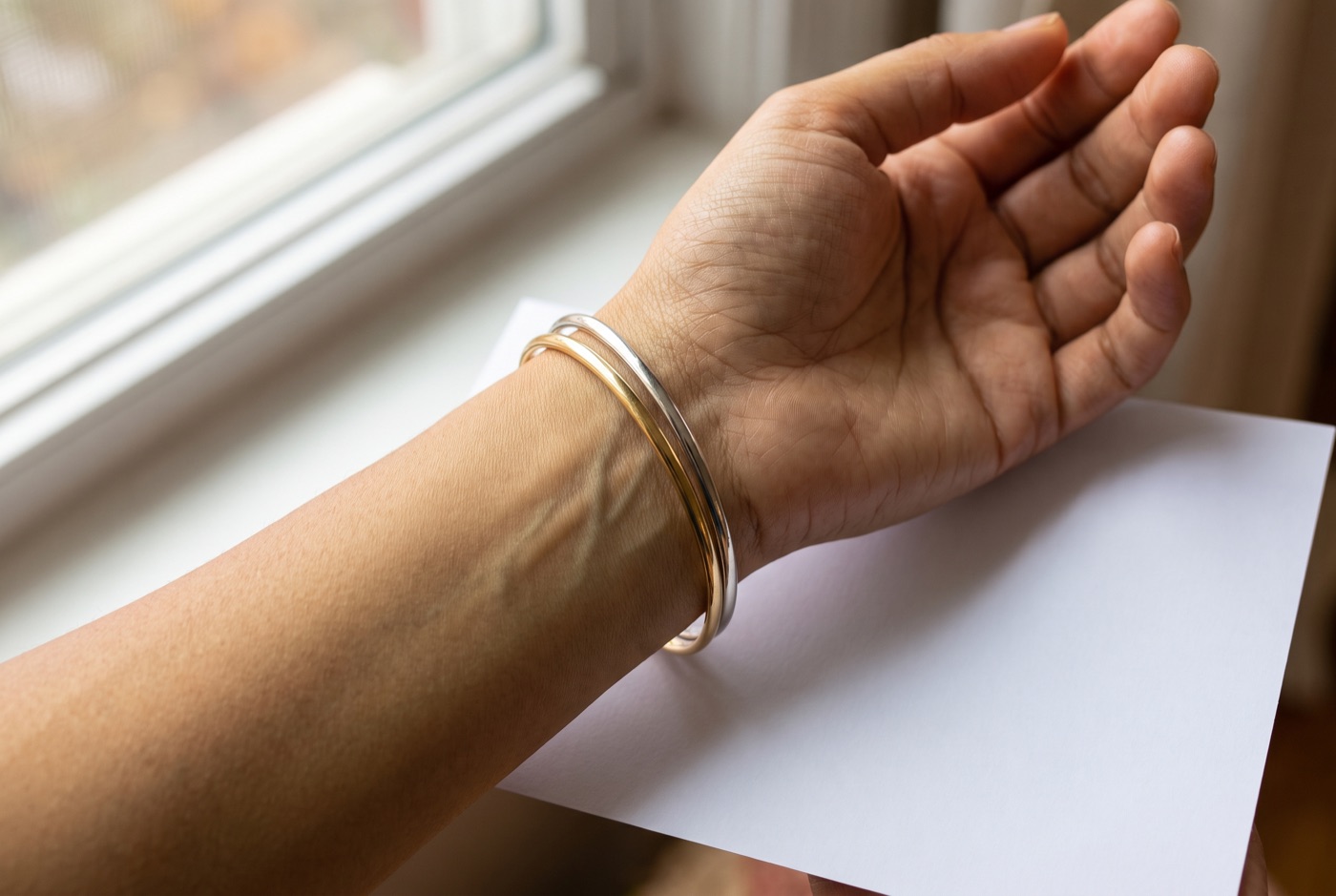
- The vein test. Green or olive veins lean warm, blue or purple lean cool, a mix you cannot call is usually neutral.
- The jewelry test. If gold makes your skin glow and silver looks harsh, you are warm. The reverse is cool. Both equally flattering usually means neutral.
- The white paper test. Next to bright white paper, skin that looks yellow or golden is warm, pink or rosy is cool, and grayish or greenish points to olive.
- The white-vs-cream test. Warm undertones look better in cream and ivory, cool undertones in crisp bright white.
- The foundation test. If foundations tend to look pink on you, you are probably warm; too yellow or orange, probably cool; gray or ashy no matter what, often olive.
Undertone vs. skin tone: what’s the difference?
Skin tone is how light or deep your skin is — fair, light, medium, tan, deep. It changes with the seasons. Undertone is the color underneath, and it stays the same whether you are pale in February or tanned in August. That is why two people with exactly the same depth can need completely different foundations: one needs a golden shade, the other a rosy one.
Every skin tone comes in every undertone. Deep skin can be cool, fair skin can be warm, and olive shows up across the whole range.
What is an olive undertone?
Olive is the undertone most quizzes forget, and the one my clients are most relieved to hear about. It sits between warm and neutral with a green or gray cast, which is exactly why regular foundations look wrong on it: pink shades look chalky, yellow shades look sallow, and almost everything looks slightly ashy by lunch.
If that sounds familiar, look for shades labeled olive or O. Where a brand has none, a neutral-warm shade is usually the closest — and mixing two shades gets you the rest of the way, as I explain here.
How to choose foundation for your undertone
Most brands print the undertone right in the shade name. The letters are not standardized, but these are the ones you will see most often.
| Your undertone | Look for | Avoid |
|---|---|---|
| Warm | W, Y, G — golden, honey, peach, caramel | Shades described as rose or pink |
| Cool | C, P, R — rose, pink, porcelain | Anything labeled golden or yellow |
| Neutral | N, NW, NC — beige, neutral, sand | The extremes in either direction |
| Olive | O, OL — olive, neutral-olive; otherwise NW | Pink-based shades |
L’Oréal Paris True Match is a helpful place to start, because the whole range is organized into W, N and C rows. Whatever the brand, test on your jaw in daylight, never on your wrist.
My pro tips
- Do the tests with bare skin and in daylight. Bathroom bulbs make almost everyone look warm.
- Check your undertone on your neck and chest too. The face is often redder than the rest of you; your foundation has to match both.
- Redness is not a cool undertone. Flushed cheeks or rosacea make skin look pink on top, which can fool the paper test. Look at your jaw and neck instead.
- Under-eye looks gray? That is a color problem, not an undertone one — a peach corrector fixes it.
- Between two results? You are probably neutral leaning one way. Pick muted, medium-strength shades and you will rarely go wrong.
Frequently asked
How do I know if my undertone is warm or cool?
Look at the veins on your inner wrist in daylight: green veins suggest a warm undertone, blue or purple veins a cool one. Then compare gold and silver jewelry against your skin — gold flatters warm undertones, silver flatters cool ones. If both tests are unclear, you are most likely neutral.
Can your undertone change?
Your undertone stays the same throughout your life, even when you tan. What changes is your skin tone, meaning how light or deep your skin is. That is why you may need a deeper foundation in summer, but it should still have the same undertone as your winter shade.
What is the most flattering lipstick for a neutral undertone?
Neutral undertones can wear both warm and cool colors, so the safest choices are balanced shades: rosy nudes, true reds that are neither orange nor blue, and soft raspberry. Muted, medium-strength versions tend to look better than very bright or very icy ones.
Is olive skin warm or cool?
Olive skin usually sits between warm and neutral, with a green or gray cast on top. That cast is why pink foundations look chalky and yellow foundations look sallow on olive skin. Shades labeled olive, or neutral-warm when a brand has no olive range, are usually the best match.