The under-eye that no concealer covers needs peach, not more concealer
Blue-grey shadow is a color problem, and stacking more skin-toned concealer on top of it only turns it ashy. A thin layer of the right peach solves it in one step.
 Danny Rose
Makeup artist · New York
Danny Rose
Makeup artist · New York
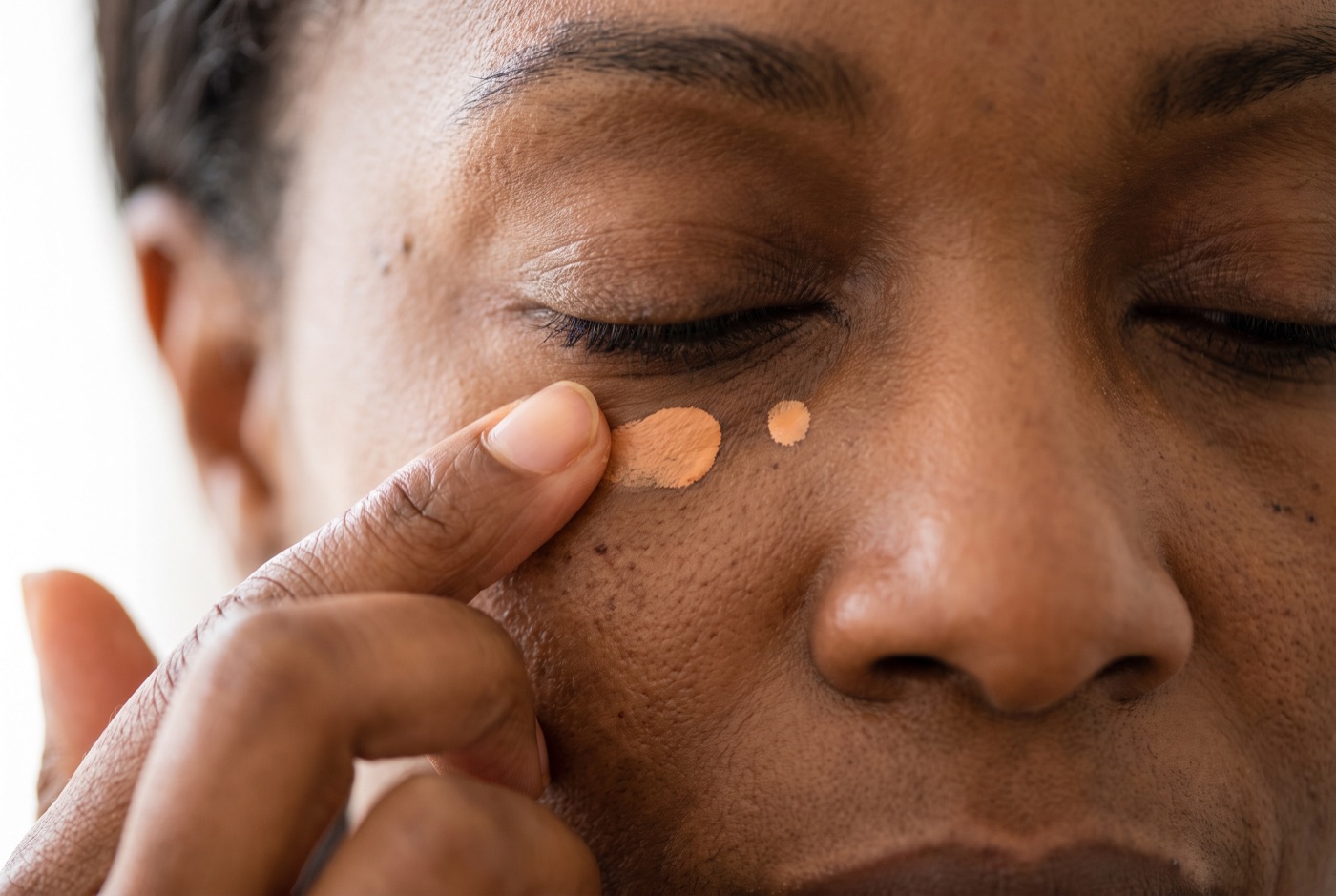
There is a moment in a lesson I can now predict. Somebody sits down, points at their under-eye and says some version of "this. It never covers." Then they show me what they do, and it is always the same: a good concealer, in a shade that matches their skin, in increasing quantities. Two passes. Three. By the third they do not look covered, they look grey.
They think they have a coverage problem. They have a color problem, and the two need completely different tools.
Why skin-toned concealer makes it worse
Look at your under-eye in daylight and actually name the color. Most people find one of two things. Either a brownish, tea-stained tone, or a blue-purple-grey one — the kind that shows the veins through thin skin and gets worse the moment you are tired or dehydrated.
That blue-grey is the one that defeats concealer. Concealer is opaque, but it is not paint: a layer thin enough to look like skin is also thin enough to let what is underneath show through. Put a light, faintly pinkish concealer over blue and you do not get "covered" — you get blue behind a milky film, which the eye reads as grey. That is what blue mixed with white does, and it is why the third layer looks worse than the first.
The fix is not more opacity. It is to cancel the blue before you cover anything.
Opposite sides of the color wheel neutralize each other. Blue's opposite is orange. Purple's opposite is yellow. So the answer to a blue-grey under-eye is a warm peach or orange — a thin, deliberate layer of it — and then your normal concealer over the top, in the normal amount, doing the normal job.
You are not covering a shadow. You are cancelling a color, then covering what is left. Those are two steps, and doing the second one twice will never do the work of the first.
Picking the shade, which is where most people go wrong
The rule is easier than the internet makes it: the deeper the skin, the deeper and more saturated the corrector.
- Fair skin: a pale, soft peach. Almost a nude with warmth in it. Anything genuinely orange will show.
- Light to medium: a clear peach, the color of the inside of a cantaloupe.
- Medium to tan: apricot, properly warm, considerably more colorful than feels sensible in the tube.
- Deep skin: real orange, sometimes verging on brick or red-orange. This is the one people under-buy by two shades, every time, because it looks alarming in the pan.
The test is not how it looks on your hand, it is what happens when you press a little onto the blue itself. Right shade, the blue goes quiet and the area reads neutral — not brighter, just not blue anymore. Too pale and it stays grey; too much and you get a warm cast, which is the only real failure mode and comes off with half of it removed.
Cream in a pot or a doe-foot beats a stick for control. Skip powder correctors — the under-eye is the one place that does not want them.
Two that I actually use
People always ask for names, so here are the two that live in my kit — one at each end of the price range.
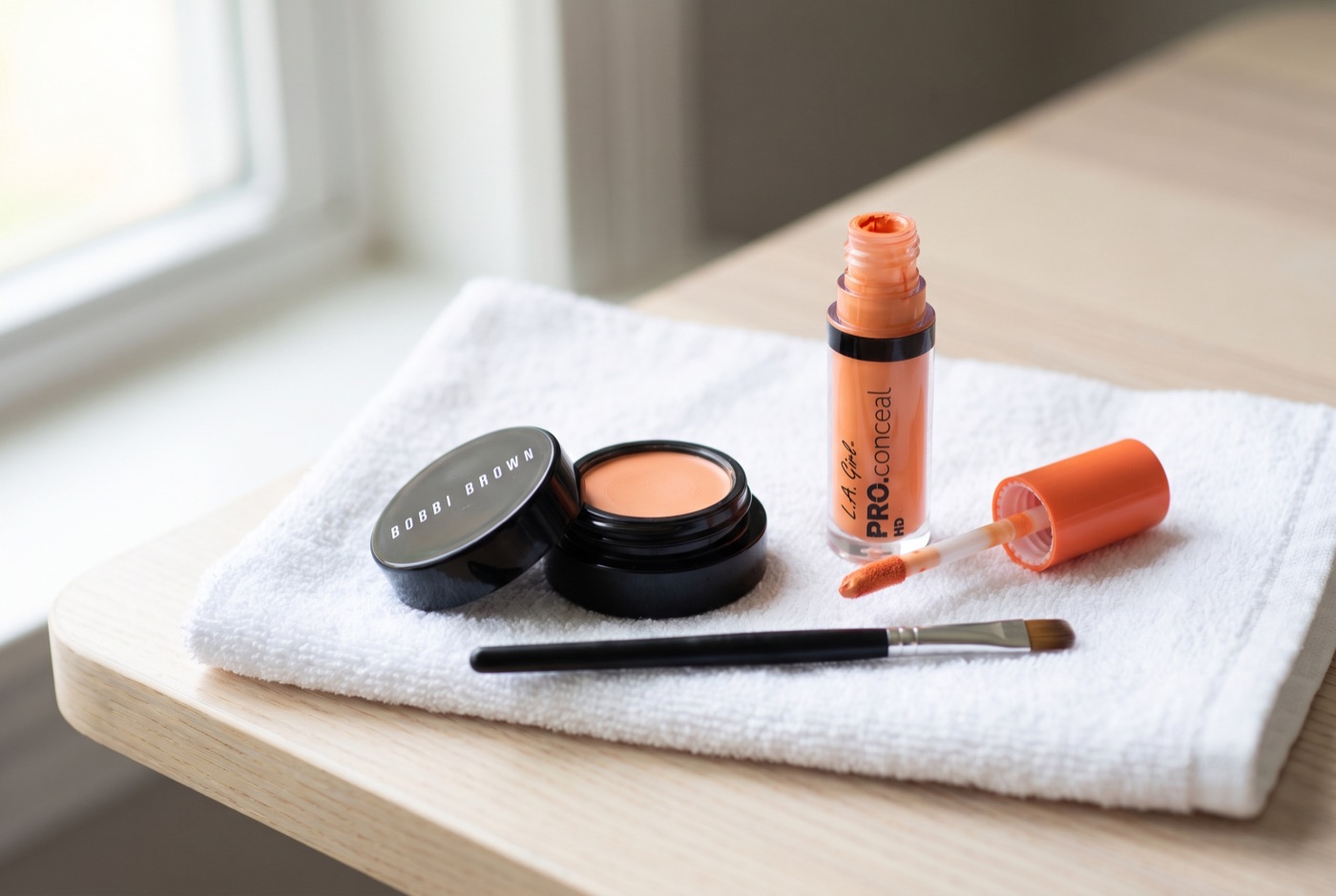
Bobbi Brown Corrector, around $36. A firm cream in a small pot, and the professional default for one reason: the range genuinely runs from pale bisque to a deep, properly orange peach. Most brands still stop three shades short of that. The texture is dry enough to stay put under concealer and it does not travel into the crease. Press it in with a fingertip; a brush is too aggressive for how little you need.
L.A. Girl Pro Conceal HD in Orange Corrector, around $6. A doe-foot bottle, much more saturated, and the one I hand to people who are not convinced this whole idea is for them. Six dollars buys you the answer in one morning. On deep skin it is properly good, not just good for the price.
How to actually apply it
- Skincare first, and give it two minutes. Corrector on a wet under-eye slides, and everything after it slides too.
- Warm a tiny amount on the back of your hand with a fingertip. Straight from the tube onto the face is three times too much, always.
- Place it only on the blue. Not the whole under-eye. Usually that means the inner third and a small strip along the lower lash line — often no bigger than a thumbprint. If part of your under-eye is not discolored, that part needs nothing.
- Tap, do not sweep. Ring finger or a small dense brush, a light bouncing motion. Sweeping drags the layer off the exact spot you put it on and deposits it where it does no good.
- Stop when the blue stops. You are not trying to make the area lighter than your face. You are trying to make it the same color as your face. That is the whole target.
- Wait thirty seconds, then go over it with your normal concealer — and use less than usual, because it only has to even out tone now, not fight a color. Correcting properly usually halves the concealer people were using.
- Set with almost nothing. A whisper of powder pressed, not brushed, and only in the crease where things gather.
When it still does not work
Three honest cases.
The tea-stained under-eye. If the color is brown rather than blue, orange does nothing — you are adding warmth to warmth. Brown wants a peach-yellow corrector at most, and mostly it just wants one thin, well-placed layer of normal concealer.
A hollow. If what you see is a genuine dip beneath the eye, that is a shadow cast by structure, not a pigment. No color on earth cancels a shadow. You can soften the edge with a slightly lighter concealer placed in the deepest part, and that is the ceiling.
Something that changed recently. If the darkness looks noticeably different from six months ago, or comes with puffiness or itching, that is a doctor question, not mine. I can change how it looks for a day. I cannot tell you why it is there.
The thing that convinces people
Do one eye. Corrector plus concealer on the left, your usual routine on the right, then stand at a window and take a photo with the flash on — flash is brutally honest about grey.
Nobody has ever reacted to that with "wow, more coverage". They react to the corrected side looking awake, with less product on it.
If you would rather have someone work out your exact peach on your own face than buy three and guess — that is a large part of what the one-to-one lesson is for. Bring what you already own. Nine times out of ten there is something in the bag that works.
Or let me do it
Reading about it is
slower than a lesson.
Two hours at your table, with your own products, and you hold the brush. $350 — and you keep the notes.
Keep reading
More from the journal
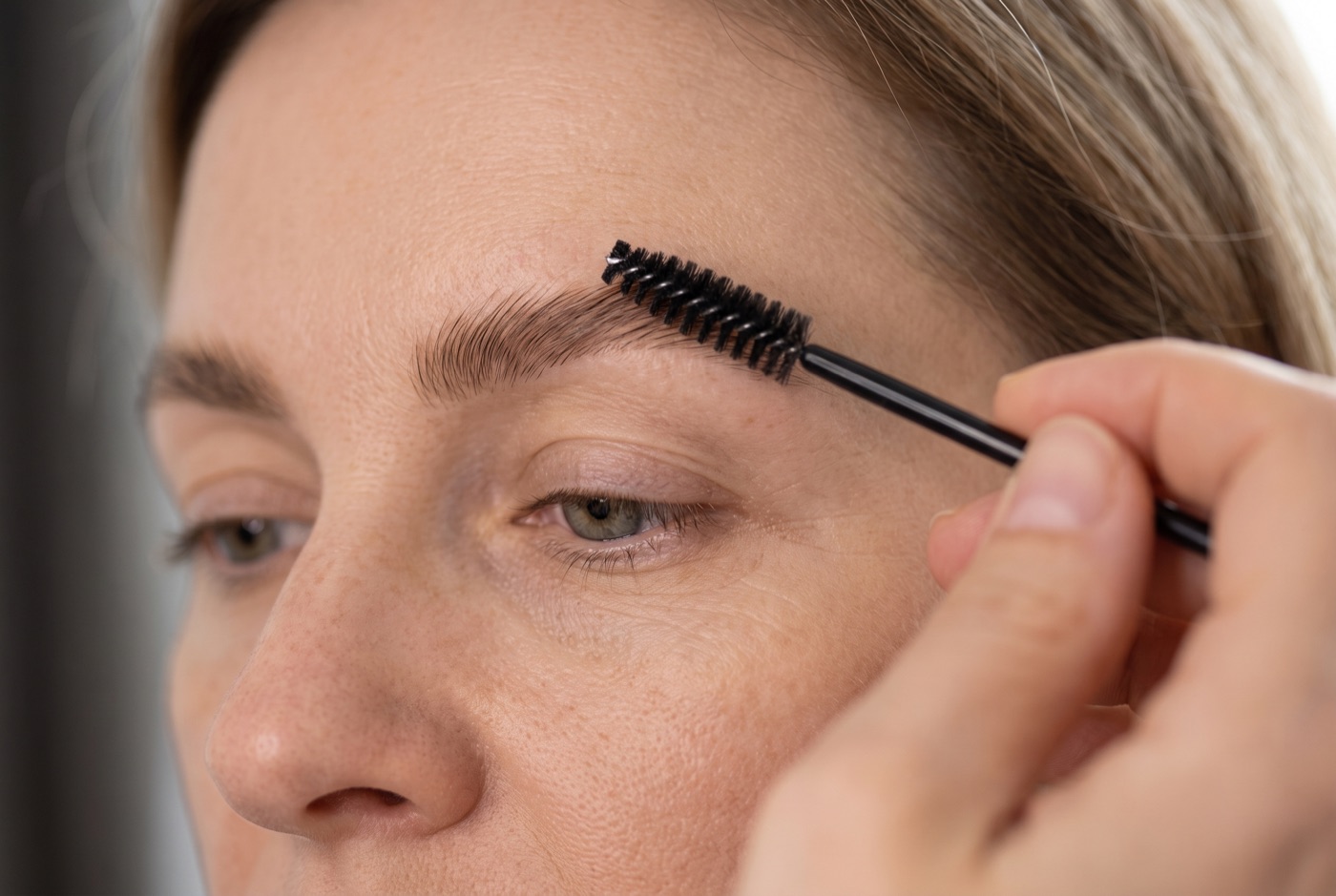
Most brows only need brushing
Before you fill anything, brush your brows up and set them. For most of the faces I see, that is the whole job, and it takes thirty seconds.
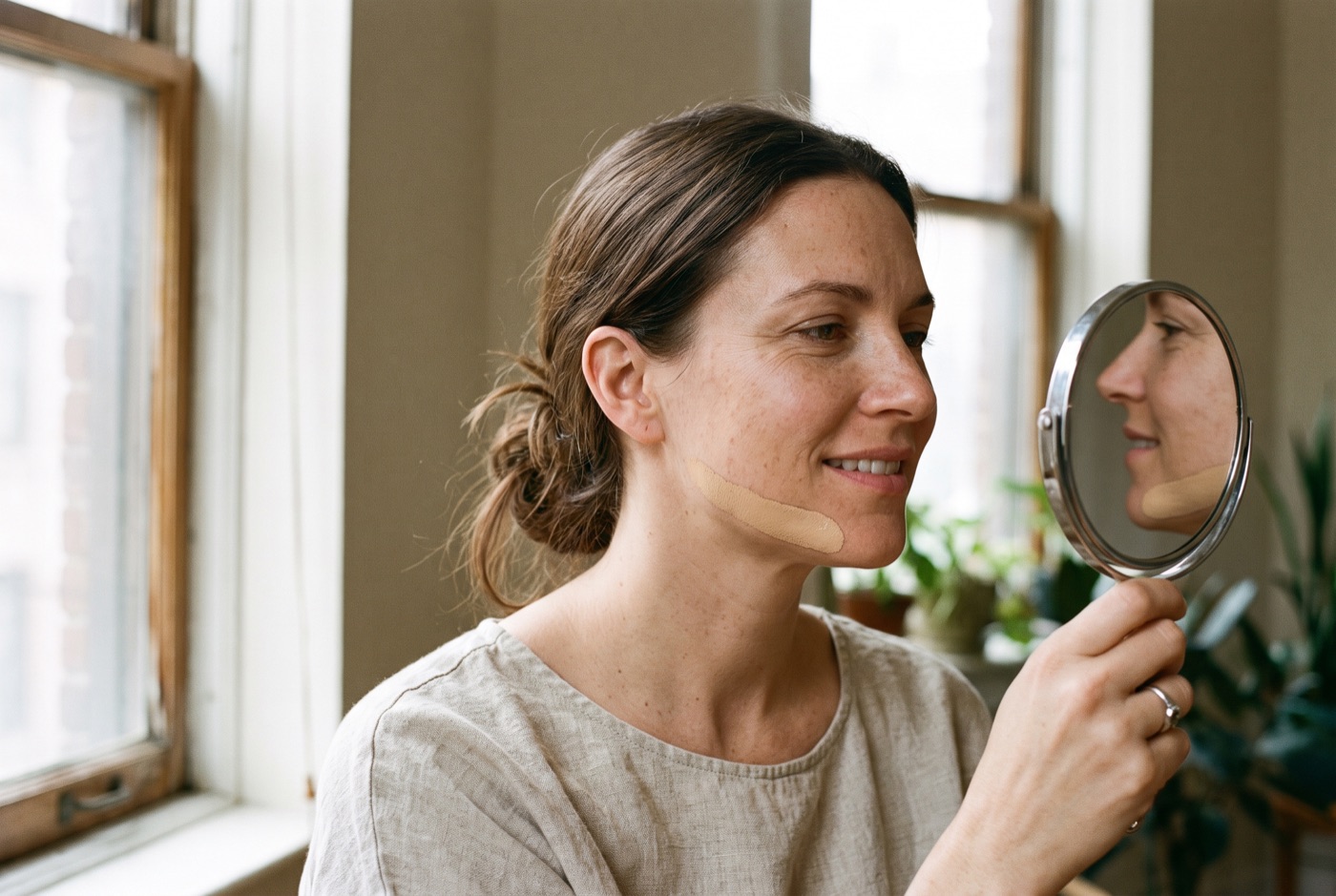
Why your foundation gets darker by lunchtime
Oxidation is real, it is predictable, and it is almost never fixed by buying a lighter shade of the same bottle.

Cloud skin makeup: what it is and how to get it
Cloud skin is the soft-focus base replacing glass skin — velvety, not flat, not shiny. How I build it in five steps, and the two powders that do it best.