Cream vs. powder blush for mature skin
Cream wins on mature skin most days, but powder still has a job. What really decides it is the order you put them on, and how little you use.
 Danny Rose
Makeup artist · New York
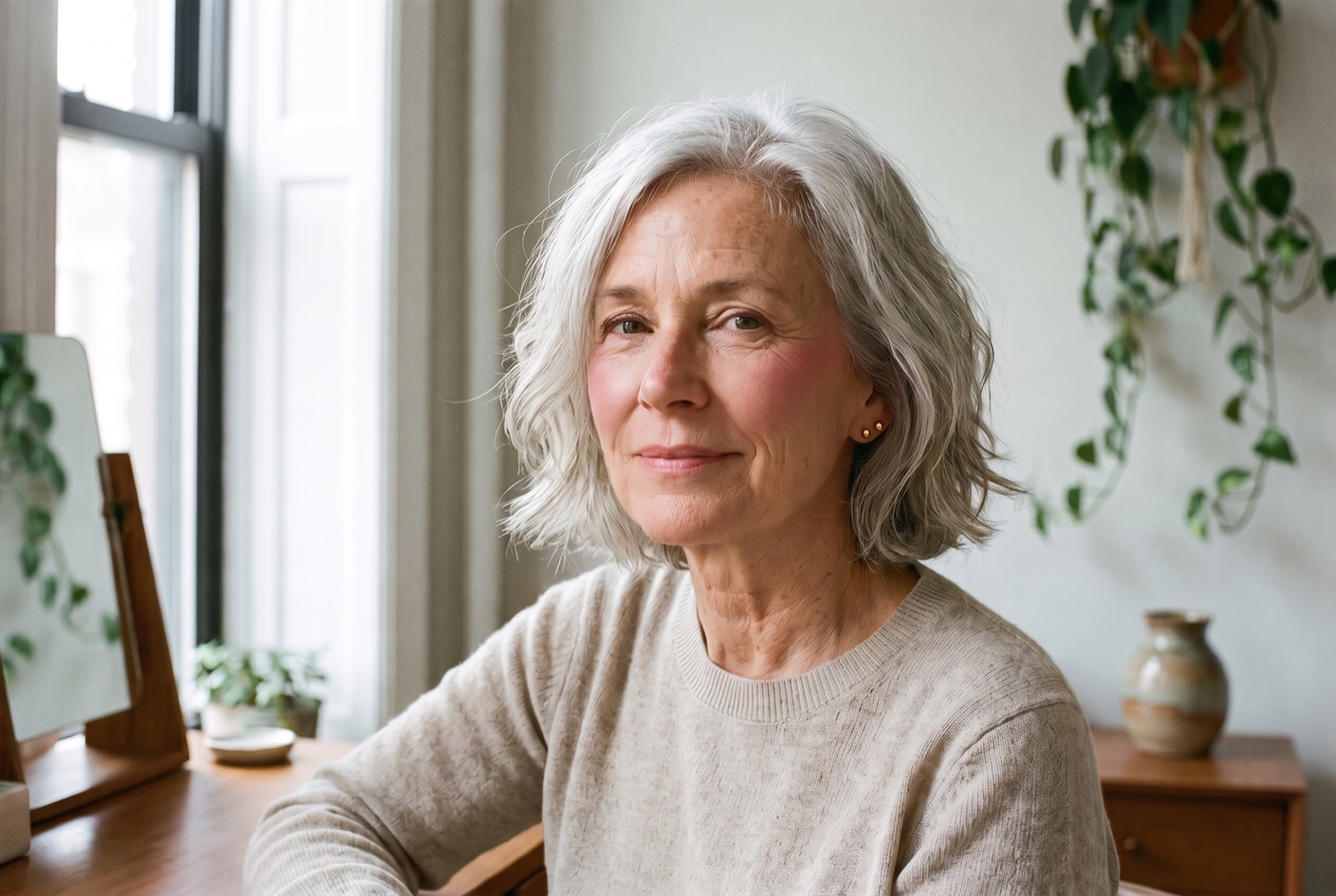
Short answer: on mature skin, cream blush wins most days. It melts into the skin instead of sitting on top of texture, so it reads as a flush rather than as makeup. Powder still has a job: a whisper of finely milled powder blush over the cream makes it last all day. What decides whether either one works is the order. Cream goes on before powder, powder goes on after it.
In almost every lesson with a client over fifty, she opens her makeup bag and takes out the same thing: a powder blush she has owned for a decade, with a shiny ring worn into the middle of the pan. Then she tells me blush "just doesn't look right on me anymore."
She is right that it doesn't look right. She is wrong about why. It is almost never her face. It is the formula, the brush and the order.
Why does powder blush look wrong on mature skin?
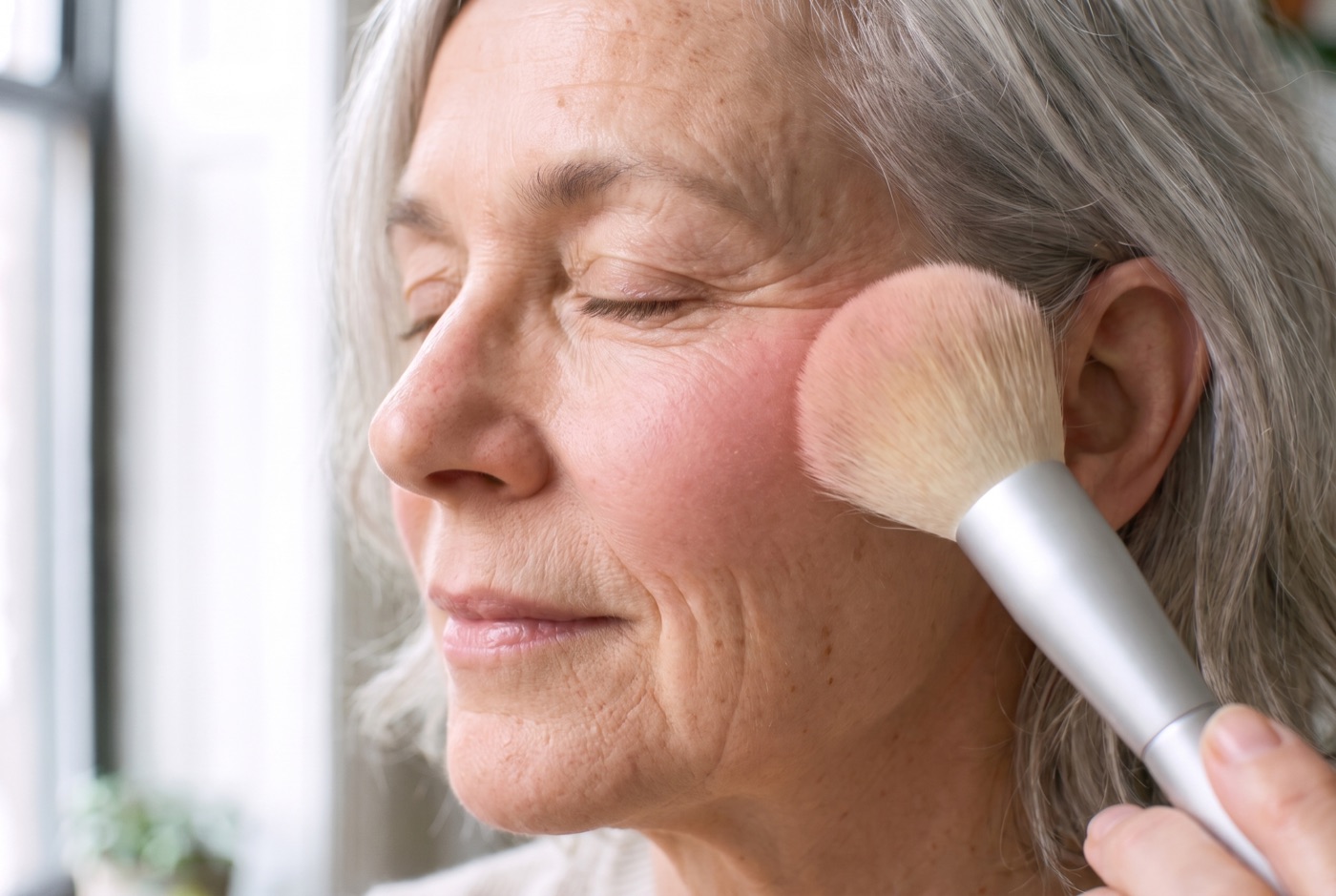
Powder sits on the skin. On a smooth twenty-five-year-old cheek that is fine. On skin with texture and fine lines, the surface has peaks and valleys, and dry pigment catches on the peaks and settles in the valleys. The result is color that outlines every line it can find.
Three habits make it worse:
- Matte powder takes the light out of the cheek, which is the one place you want to keep it.
- Shimmer powder with visible particles magnifies texture instead of softening it.
- Powder over a fully powdered face, with a dense brush. That is a stripe of dry color sitting on another dry layer, and it looks like a stripe.
The reverse goes wrong too. Cream pushed over a face already set with powder drags, lifts the base and goes patchy. So people try cream once, it looks streaky, and they go back to the old compact. The formula was not the problem. The order was.
Cream vs. powder blush: what is the difference?
| Cream blush | Powder blush | |
|---|---|---|
| Where it sits | in the skin | on the skin |
| On texture and fine lines | softens them | can catch and settle |
| Finish | satin, skin-like | matte to soft satin |
| Staying power on its own | fades sooner | lasts longer over a set base |
| Applied with | fingers or a damp sponge, before powder | a fluffy brush, after powder |
| Best for | dry, normal and mature skin | oily skin, long days, humid weather |
Cream goes on before powder, powder goes on after it. Get the order right and either one works. Get it wrong and neither does.
How do you apply cream blush on mature skin, step by step?
Four steps, about three minutes. The last one is optional, and most people have never heard of it.
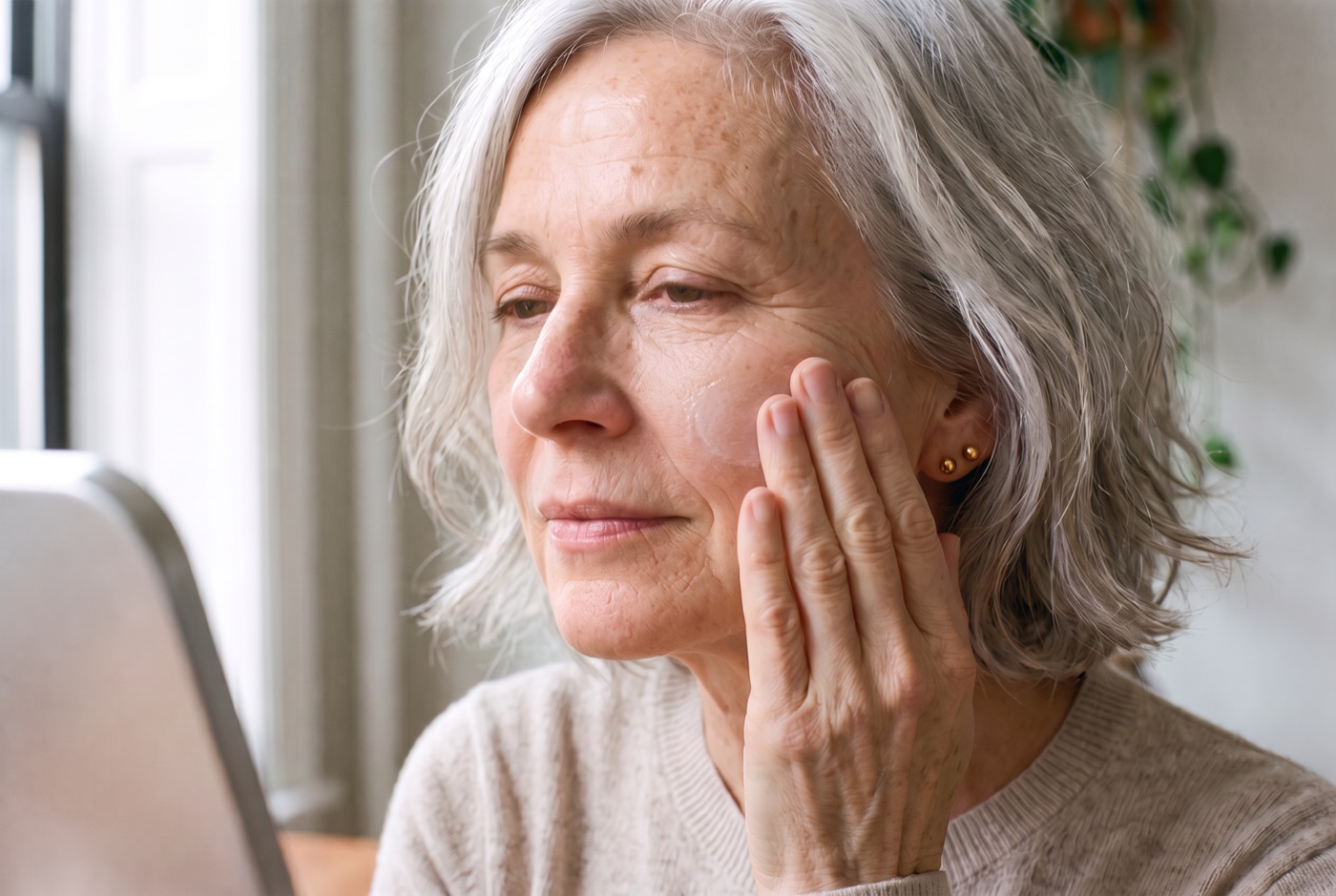
Step 1: Moisturize the cheek and give it three minutes
Cream blush needs skin with a little slip that is not wet. Press a moisturizer in with flat fingers, then wait. Keep your base thin, and do not powder the cheeks yet.
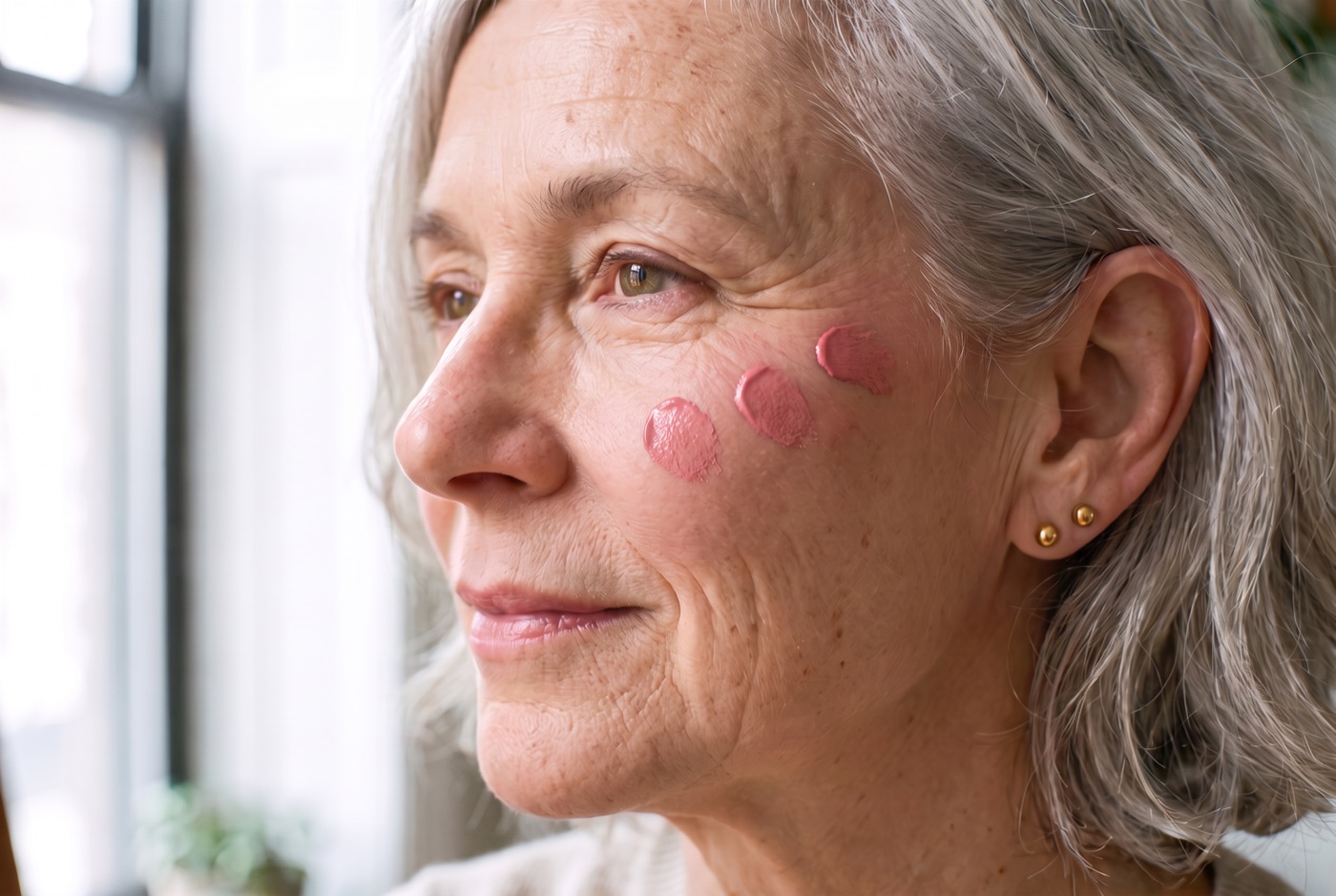
Step 2: Dot it high, starting at the outer edge
Dab three small dots along the top of the cheekbone with one fingertip: the first out toward the hairline, just below the outer corner of your eye, the next two moving inward. Stop below the outer edge of your iris. The most color lands where you touch first, so start high and toward the temple. If it feels too high, it is probably right. The full case is in where blush actually goes.
Step 3: Press and roll, never rub
Use the pads of your fingers, which are warm and melt the cream, or a damp sponge. Press, then roll up and out toward the temple. Rubbing lifts the foundation underneath; pressing pushes the color into the skin and leaves the base alone. Keep going until you cannot find the edge.
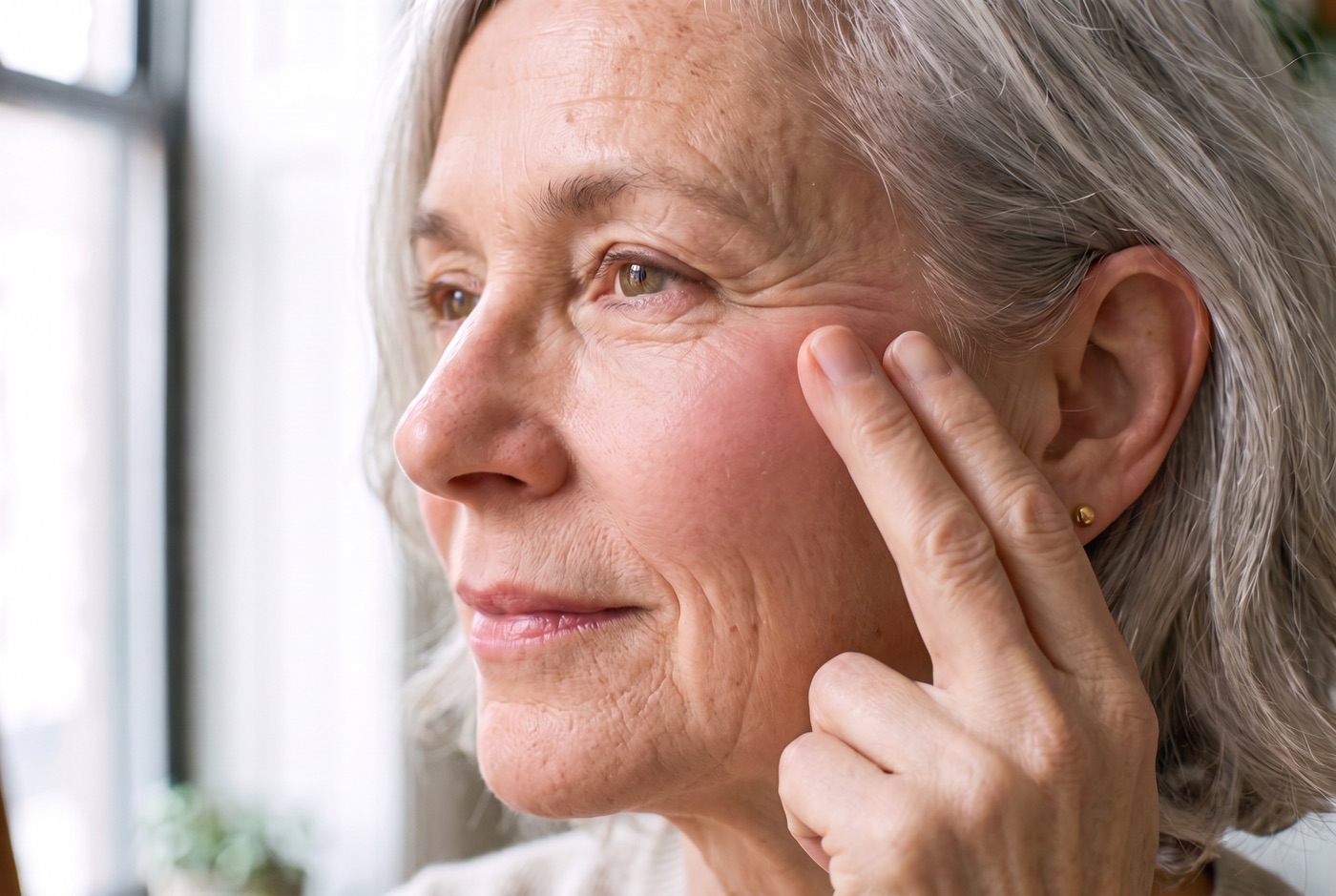
Step 4: Lock it with a whisper of powder blush
For long days: a wedding, a work event, a humid New York August. Swirl a big, fluffy brush once in a finely milled powder blush in the same color family, tap it on the back of your hand, and sweep one light pass over the cream. Then powder only the center of the face, around the blush, as for cloud skin. The cream gives the flush; the powder holds it for hours.
The three blushes I reach for
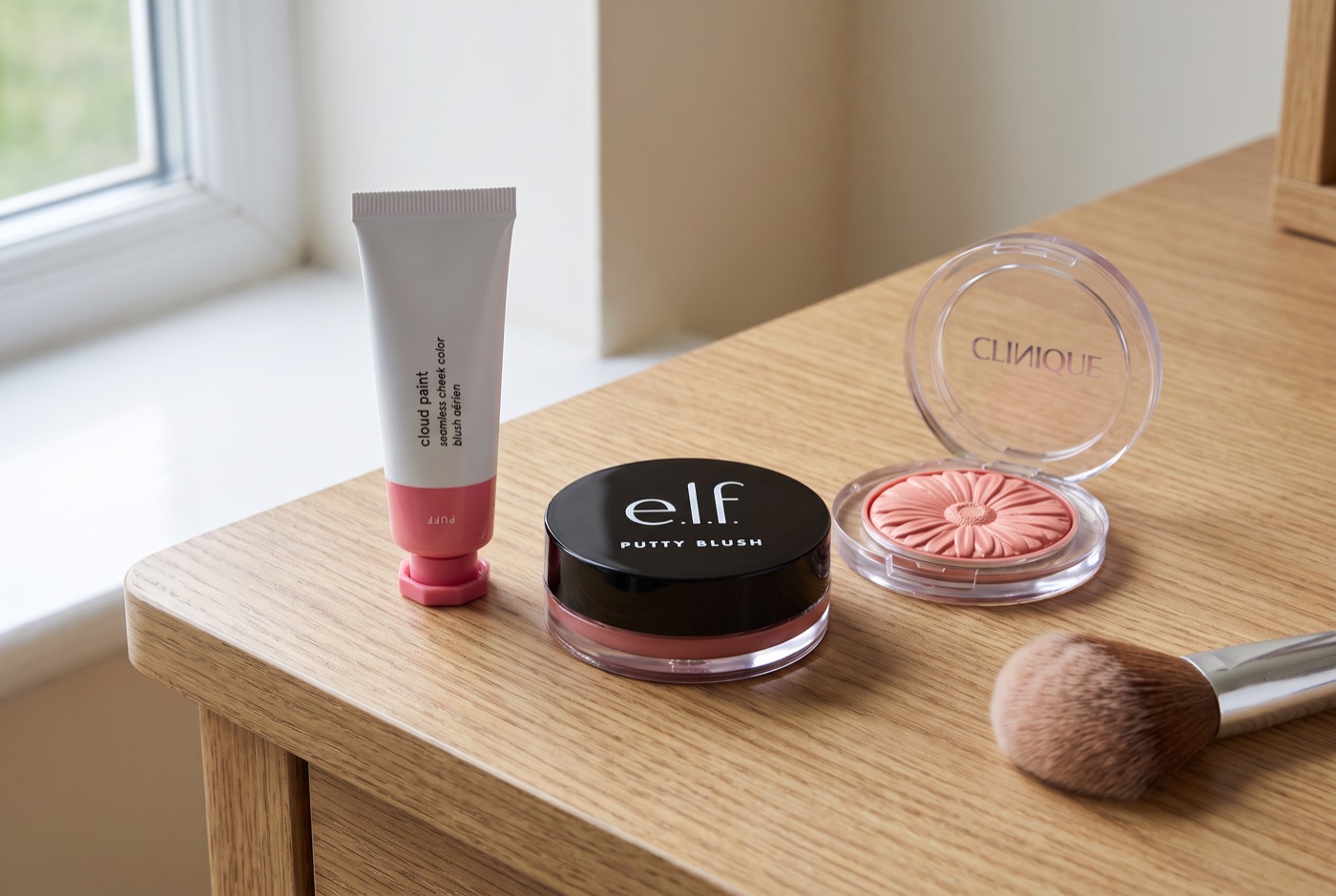
No affiliate links, no codes. These three live in my kit for exactly this job, and one is very cheap.
Glossier Cloud Paint, about $24. A gel-cream in a little squeeze tube, and the most forgiving cream blush I know on textured skin. It is sheer, blends with almost no effort, and is very hard to overdo if you start with a dot the size of a lentil.
e.l.f. Putty Blush, about $8. The bargain, and a clever one. It goes on like a cream and sets to a soft powder finish, the closest thing to having both in one jar. Ideal for normal to oily skin and long days. It is pigmented, so touch the jar lightly, once.
Clinique Cheek Pop, about $32. My powder for Step 4. It is milled so finely that it barely reads as powder, it builds in sheer layers, and on a fluffy brush over cream it does not settle into lines. If you want one powder blush, make it this one.
When is powder blush the better choice?
There are good reasons to stay with powder, and none of them is about age: oily skin (plenty of people still have it at sixty, and cream slides on it by lunch), very long days, heat and humidity, or simply preferring it, which is a perfectly good reason.
Then choose a finely milled powder with a satin finish rather than flat matte, with no visible shimmer particles. Apply it over a set base with a big, loose brush and use about half of what the brush wants to pick up.
If it still does not look right
The cream disappears by lunchtime. Add Step 4, or blot first and press a little more cream on top.
The cream goes patchy. The skin was too dry, still too wet, or there was powder underneath. Take that cheek back to moisturizer and start again.
The color sits in lines whatever you use. Use less, place it higher, and check it by a window rather than under the bathroom light. If your skin is flaking or reacting no matter what you put on it, that is a question for a dermatologist, not for me.
My pro tips for blush on mature skin
- Warm the cream on the back of your hand first. It melts in faster, with less rubbing.
- Choose a shade a touch brighter than feels safe. The muted brown-pinks that look sophisticated in the pan often look tired on the cheek.
- Look at it from arm's length, not nose-to-mirror. Nobody sees your cheek from five inches away.
- Keep the cream in your bag for touch-ups. It presses over the day's makeup; powder over an afternoon face does not.
- Skip glitter and chunky shimmer on the cheeks. A satin sheen is all the glow you need.
Frequently asked
Is cream or powder blush better for mature skin?
For most mature skin, cream. It melts into the skin and softens texture, while powder sits on top and can settle into fine lines. Powder is still the better choice for oily skin, long days and humid weather, and works beautifully as a light layer over cream.
Does powder blush make wrinkles look worse?
It can, if it is matte or shimmery, applied with a dense brush, or layered over a fully powdered face. A finely milled satin powder on a big fluffy brush, used sparingly and placed high, looks soft. The problem is usually amount and order, not powder itself.
Can you put powder blush over cream blush?
Yes, and it is one of the best ways to make blush last on mature skin. Blend the cream fully, then sweep one light pass of a powder blush in a similar shade over it with a fluffy brush. Never put cream over powder; it drags and goes patchy.
How do you make cream blush last on mature skin?
Start with moisturized skin that has absorbed for a few minutes, keep the foundation thin, and press the cream in rather than rubbing. Set it with a light pass of powder blush, and powder only the center of the face. For touch-ups, blot first, then press on a little more cream.
If you would like to find your placement and your shade on your own face, where it is easiest to get right, that is a good half of a one-to-one lesson. Bring the old powder blush with the shiny ring in the middle. It might get a second life on top of a cream.
Or let me do it
Reading about it is
slower than a lesson.
Two hours at your table, with your own products, and you hold the brush. $350 — and you keep the notes.
Keep reading
More from the journal
Most brows only need brushing
Before you fill anything, brush your brows up and set them. For most of the faces I see, that is the whole job, and it takes thirty seconds.
Why your foundation gets darker by lunchtime
Oxidation is real, it is predictable, and it is almost never fixed by buying a lighter shade of the same bottle.

Cloud skin makeup: what it is and how to get it
Cloud skin is the soft-focus base replacing glass skin — velvety, not flat, not shiny. How I build it in five steps, and the two powders that do it best.