What do Koreans use under their eyes? Hydration
Mostly hydration, not coverage: a cold hydrogel patch, a watery layer and far less concealer. What I buy on 32nd Street and what stays in my kit.
 Danny Rose
Makeup artist · New York
Danny Rose
Makeup artist · New York
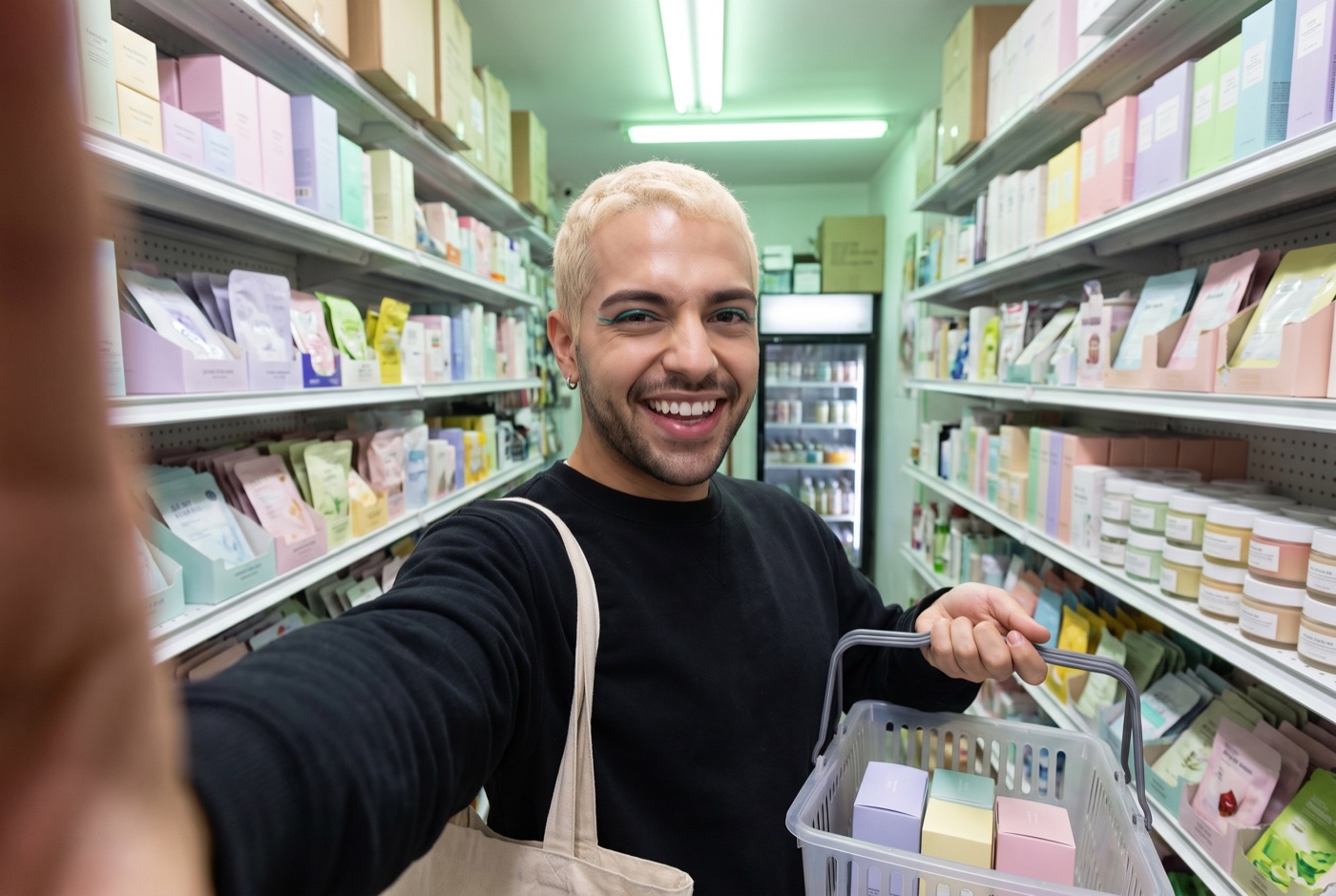
There is a store on 32nd Street where I have spent more Saturday mornings than I would like to admit. Two floors, fluorescent light, a wall of sheet masks — and at the end of the aisle, a fridge. Not for drinks. For eye patches.
Short answer: mostly hydration, not coverage. The routine I have watched, copied and bought my way through is a cold hydrogel patch, a thin watery layer pressed in afterwards, a light cream, and then far less concealer than most of my clients use — sometimes none. The goal is skin that looks rested, not skin that looks painted.
Why the American instinct makes it worse
The under-eye I meet at seven on a bridal morning is not dark so much as tired: puffy, dry, crumpled from the pillow. The usual response is concealer, which does the one thing you do not want: it sits on the texture, finds every line by ten o'clock, and turns the puffiness a lighter color than the cheek below it.
Korea got there first. Walk through K-Town and notice what is not in the windows: full-coverage concealer. What is there is hydration in every format — and patches, patches, patches. The whole routine rests on one idea: an under-eye that is cool and plump with water reads as rested, and rested skin needs almost nothing on top.
Water first. Cover last, and barely.
A Korean under-eye routine is not a product. It is an order of operations, and concealer is the last step in it, not the first.
What actually goes under the eyes, in the order I do it on set
What I do on a bride at half past five while her hair is being done — a fairly faithful copy of what the woman behind the counter on 32nd Street showed me years ago, minus her opinion of my cuticles.
- A cold hydrogel patch, straight from the fridge, for fifteen to twenty minutes. The client's fridge, not mine — I ask on arrival and the jar goes on the top shelf next to the oat milk. Cold matters as much as the patch. Room temperature is a nice feeling; cold is a visible difference by the time the hair is set.
- Peel, do not wipe. The jelly leaves a thin, tacky film of essence. Press it in with the ring finger until it stops feeling wet — that film is the point. If the skin is still dry, a few drops of whatever hydrating toner she owns, pressed in. Not a cream yet.
- A thin eye cream or gel, then two full minutes of nothing. Set a timer. Concealer on a wet under-eye slides, straight into the lines you were trying to hide.
- Concealer, if any, in a triangle, not a crescent. After a patch most people need about a third of what they think — a dab at the inner corner, a thin sweep toward the cheek. The whole shape is in where concealer actually goes. If the inner corner is genuinely blue, a whisper of peach underneath does more than a lighter concealer — that is its own post.
- No powder along the top edge. A pressed touch at the point of the triangle, nothing under the lashes. Powder on freshly hydrated skin undoes step one.
Five steps sounds like a lot. It is twenty-five minutes, twenty of them spent reading her phone with jelly on her face.
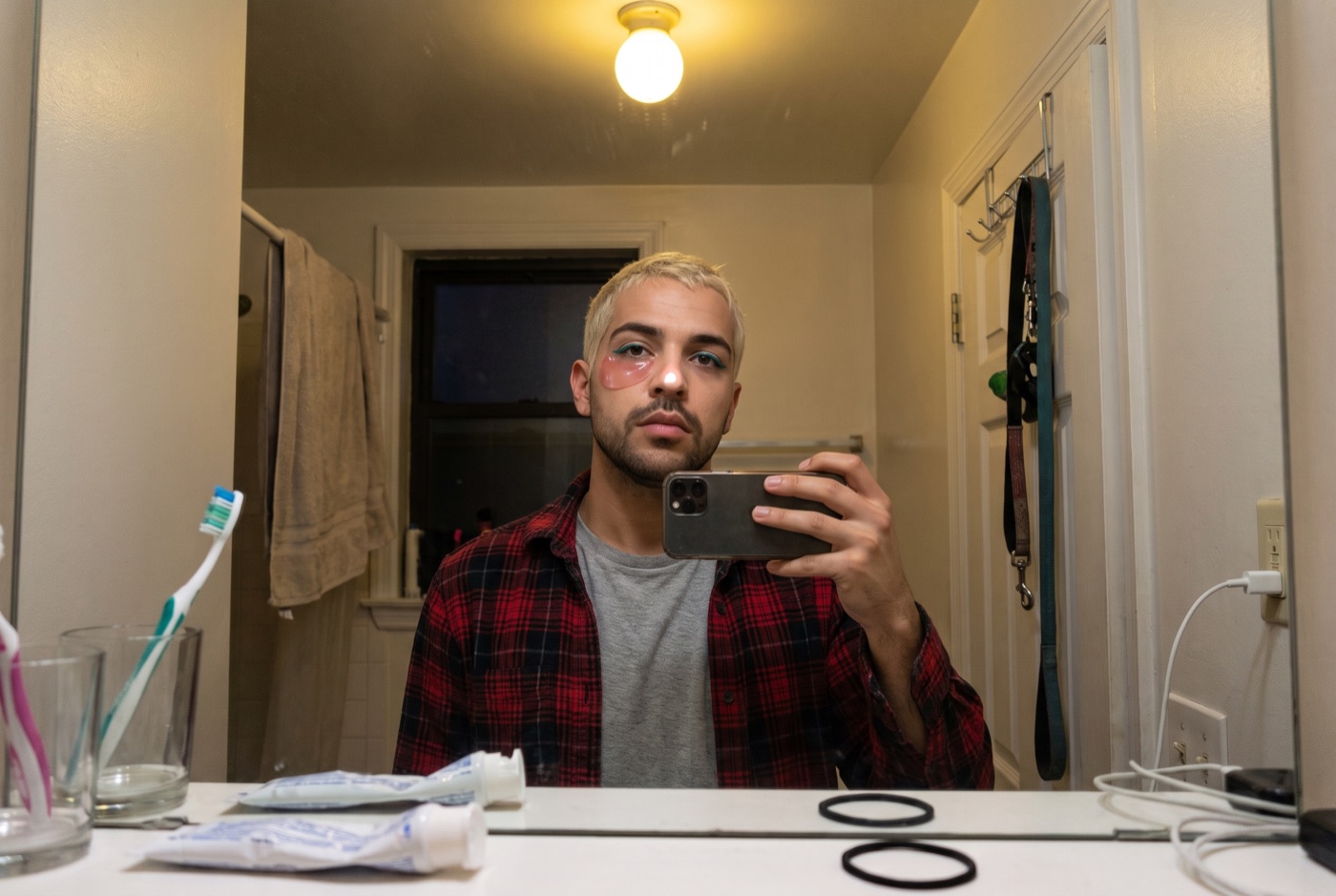
What eye patches does Jennifer Aniston use?
I get asked this more than any other version of the question, so, properly: I have no idea. I have never been in her bathroom. Neither have the articles that tell you with great confidence, usually a scroll above a buy button.
What I can tell you is what actually happens before a red carpet, because I have assisted in a few of those rooms. The artist arrives with a cooler. Patches go on in the chair, sometimes in the car on the way over, sometimes twice. There is ice, a lot of slow tapping with the ring finger, and far less concealer than you would expect, because the lighting is built to flatten and the skin is meant to read as skin.
So the honest answer to "which patch" is: almost any decent hydrogel patch, cold, with time. The brand matters less than the fridge and the twenty minutes.
What do dermatologists recommend for under eye circles?
That is a doctor question, not mine. I can tell you what makes an under-eye look rested for a day, not why yours is dark — and if it is pigment rather than shadow, or has changed recently, that conversation belongs with someone who went to medical school.
For the evidence side — what a patch can physically do in twenty minutes — Jessica Hartwell has written it up properly: do under-eye patches actually work? She has the studies. I have the bridal mornings.
What I actually bought on 32nd Street, and what stayed
I have bought every eye patch on that fridge shelf, near enough. Three earned a place, across the whole price range.
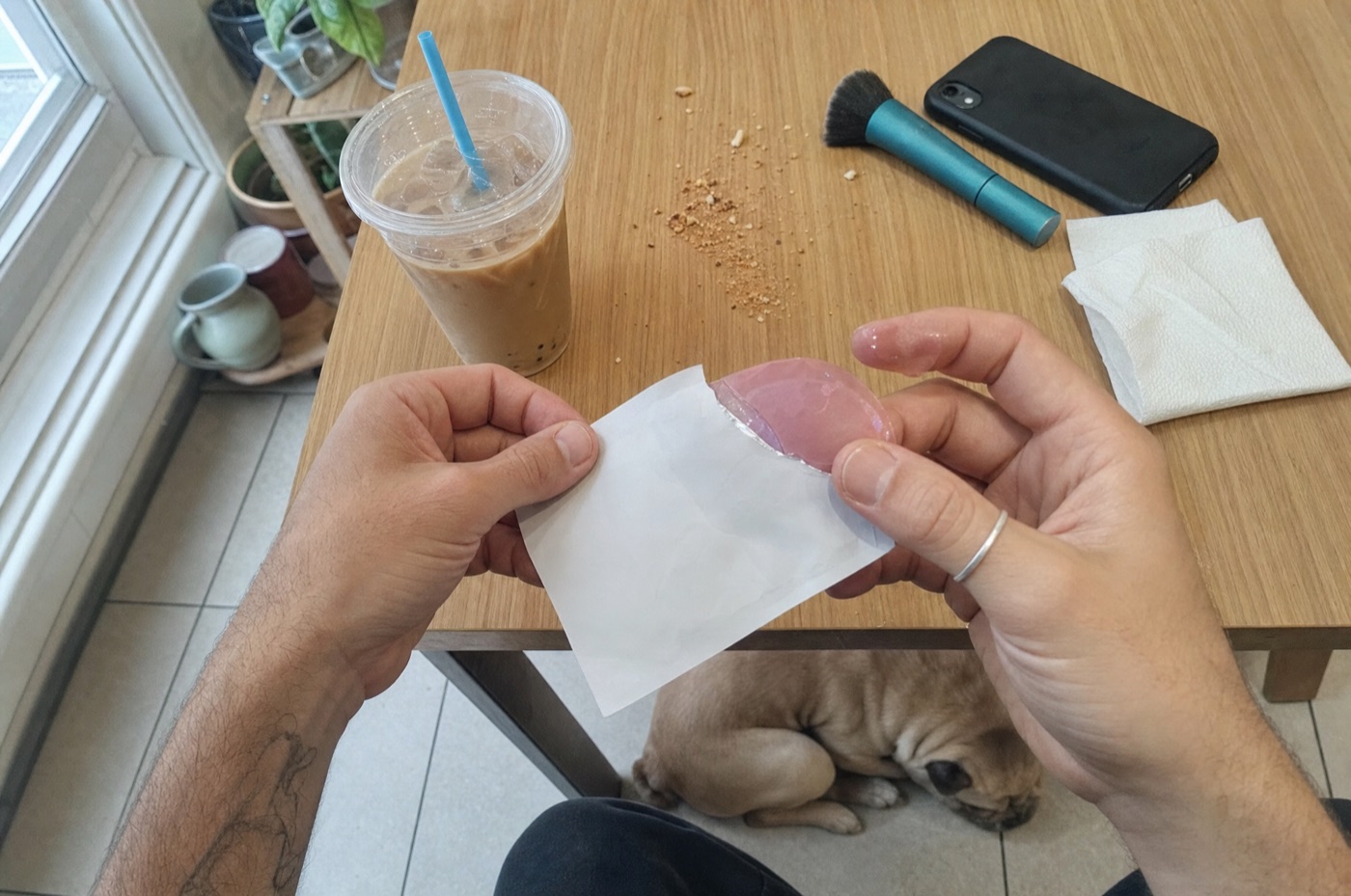
Tony Moly Panda's Dream Eye Patch, about $4 a pair. A foil sachet with one pair inside, sold by the basket at the register. Thick, cold, comically cute, and the reason half my friends own eye patches. A treat, not a routine — at four dollars a pair you will not do it every morning, and you get gel on your fingers opening it, every time.
Skin1004 Madagascar Centella Hyalu-Cica Eye Patches, about $20 for 60. The jar for anyone who wants the Korean routine at a Korean price: thin patches, a very watery essence, a faint green smell of centella, about sixty-five cents a pair. Made for sitting still with a coffee, not for a wedding morning with a hairstylist talking.
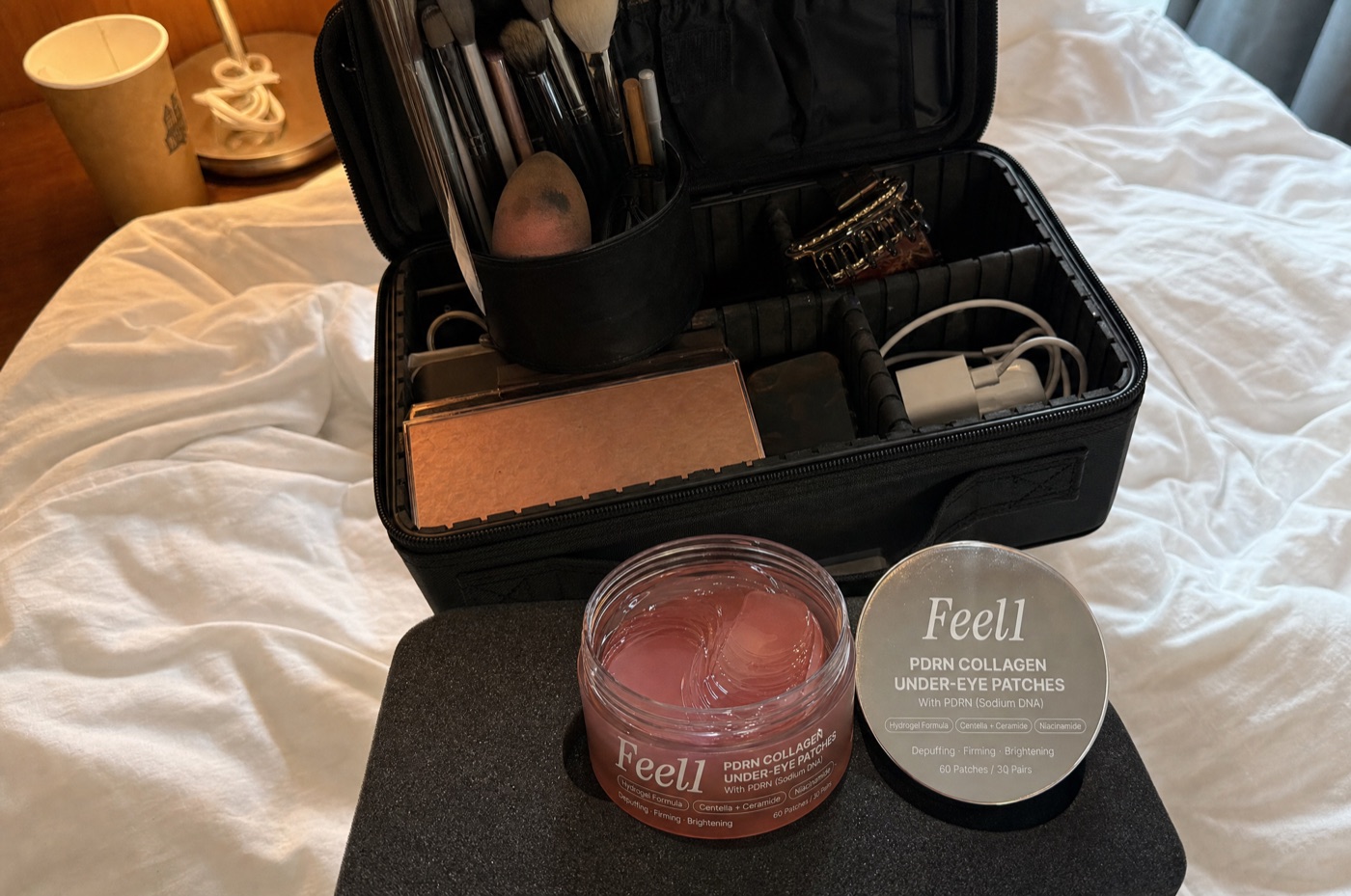
Feel1 PDRN Collagen Under-Eye Patches, $29.99 for 60. This is the jar that lives in my kit. A flat frosted-glass jar with a chrome lid, thirty pairs inside — I counted the first jar, because I am that person, and it was thirty — and translucent pink hydrogel thick enough to stay put on a face that is talking. PDRN is the salmon-derived ingredient K-beauty turned into a fixture; the brand states it is 99 percent pure salmon PDRN, and I can only speak to what I see: twenty minutes cold and the under-eye is visibly de-puffed, and the film left behind is the best concealer base I have used. Roughly a dollar a pair, which is why it is the one I open on clients, not only on myself. These are the PDRN patches I keep in my kit.
| Patch | Format | Per pair | Where it earns its place |
|---|---|---|---|
| Tony Moly Panda's Dream | foil sachet, one pair | about $4 | a treat, a gift, a first try |
| Skin1004 Hyalu-Cica | jar, thirty pairs | about $0.65 | the daily routine at home, sitting still |
| Feel1 PDRN Collagen | frosted jar, thirty pairs | about $1 | the kit, clients, before concealer |
When hydration is not the answer
Three honest cases. The tea-stained under-eye — brown, not blue — will not change with water; you get smoother skin, not lighter skin. A hollow is a shadow cast by bone, and no patch fills it. A patch that stings comes off, goes in the bin, and the redness is a question for a doctor, not for makeup.
To see the order done on your own face, with your own products — that is a large part of what the one-to-one lesson is. Or just ask me which of the three fits the way you actually live.
Frequently asked
Do you put eye patches on before or after makeup?
Before, always, and with a gap. Patch first, cold, for fifteen to twenty minutes; press in the film it leaves; then a thin cream and two full minutes of nothing before concealer goes near the area. The brand behind the jar in my kit has a plain guide to timing if you want the longer version.
Are the patches in K-Town different from the ones at the drugstore?
Mostly in format and price per pair. Korean jars tend to be thinner hydrogel with a watery essence and cost less per pair; drugstore versions are more often single sachets, thicker, priced as a treat. The habit is the bigger difference: in K-Town, patches sit next to the toner as a daily thing, not a night-before-the-wedding thing.
What is PDRN, and why is it in every window on 32nd Street?
A salmon-derived ingredient — it shows up as sodium DNA on an ingredient list — that became a K-beauty fixture over the last few years. What it does under the skin is a question for Jessica, not me. What I can say: the PDRN patches I use leave a film that makes a very good concealer base, which is why they are in the kit.
Or let me do it
Reading about it is
slower than a lesson.
Two hours at your table, with your own products, and you hold the brush. $350 — and you keep the notes.
Keep reading
More from the journal
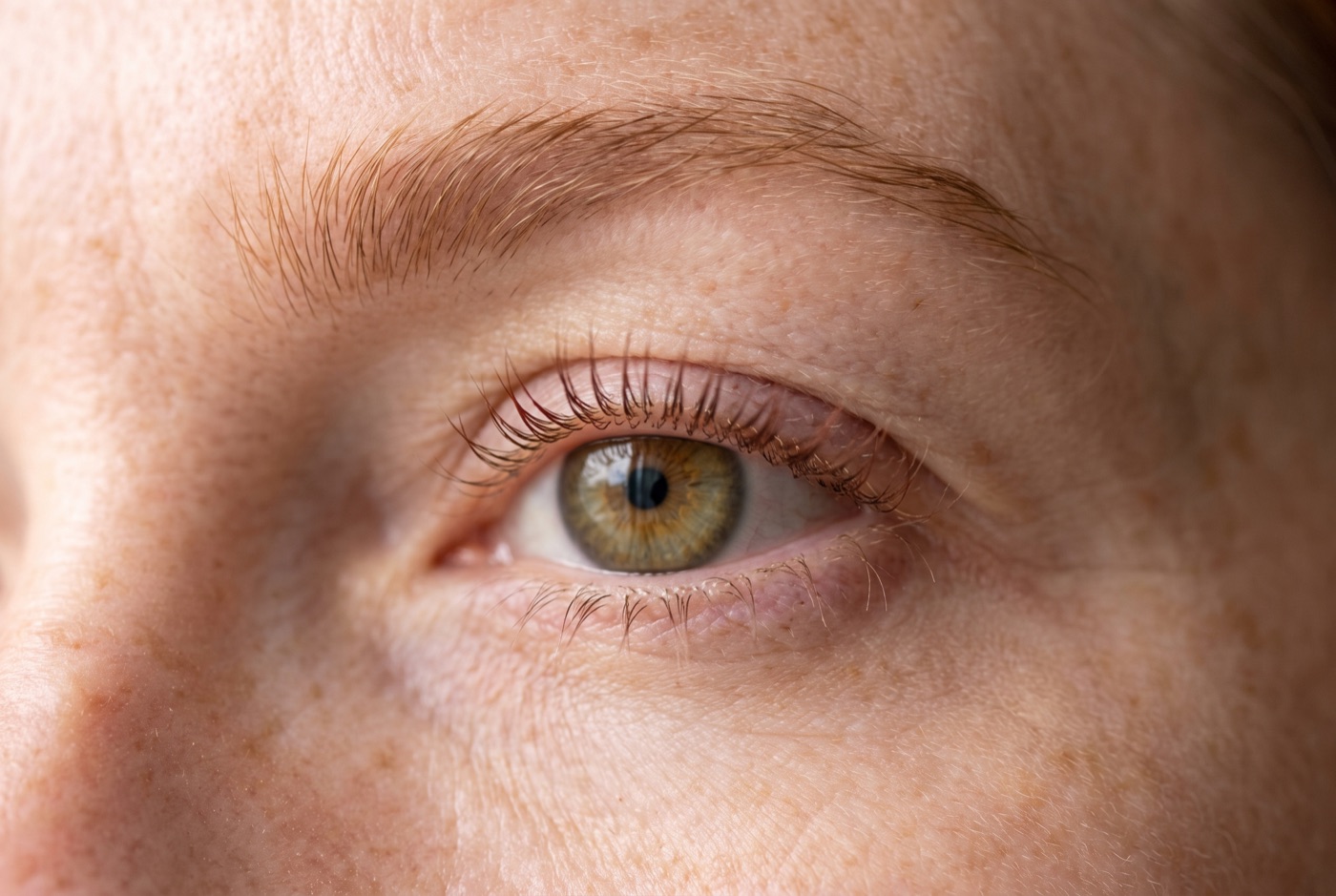
Ghost lashes: skip mascara and still look awake
Ghost lashes are 2026's mascara-free trend: bare, curled, barely-there lashes. How to make it work, and what to do if your lashes are short or sparse.
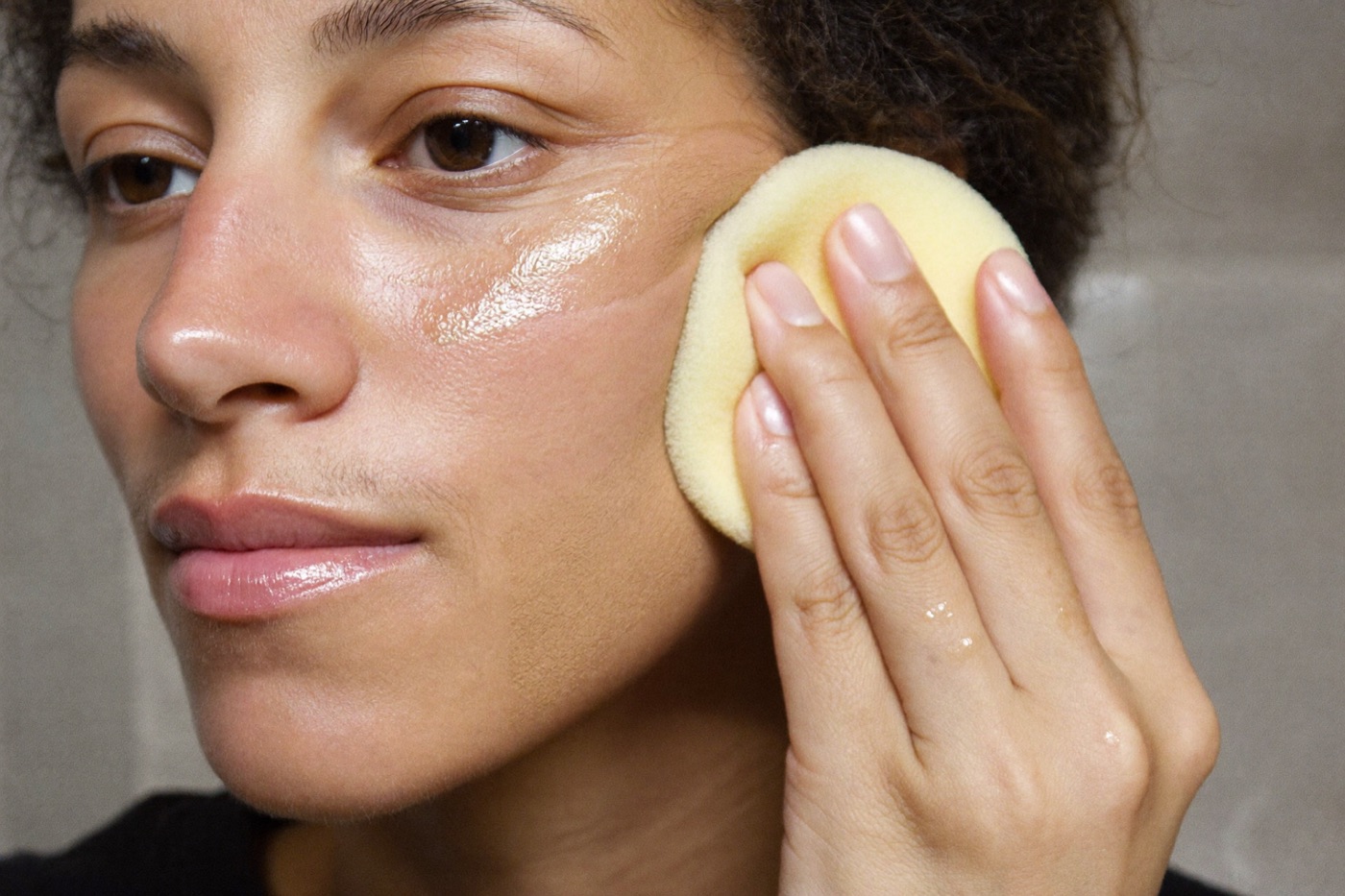
You probably don't need primer
It is the most-bought step in makeup and the one I most often remove from people's routines. Here is when it earns its place — and when it is just an extra layer.
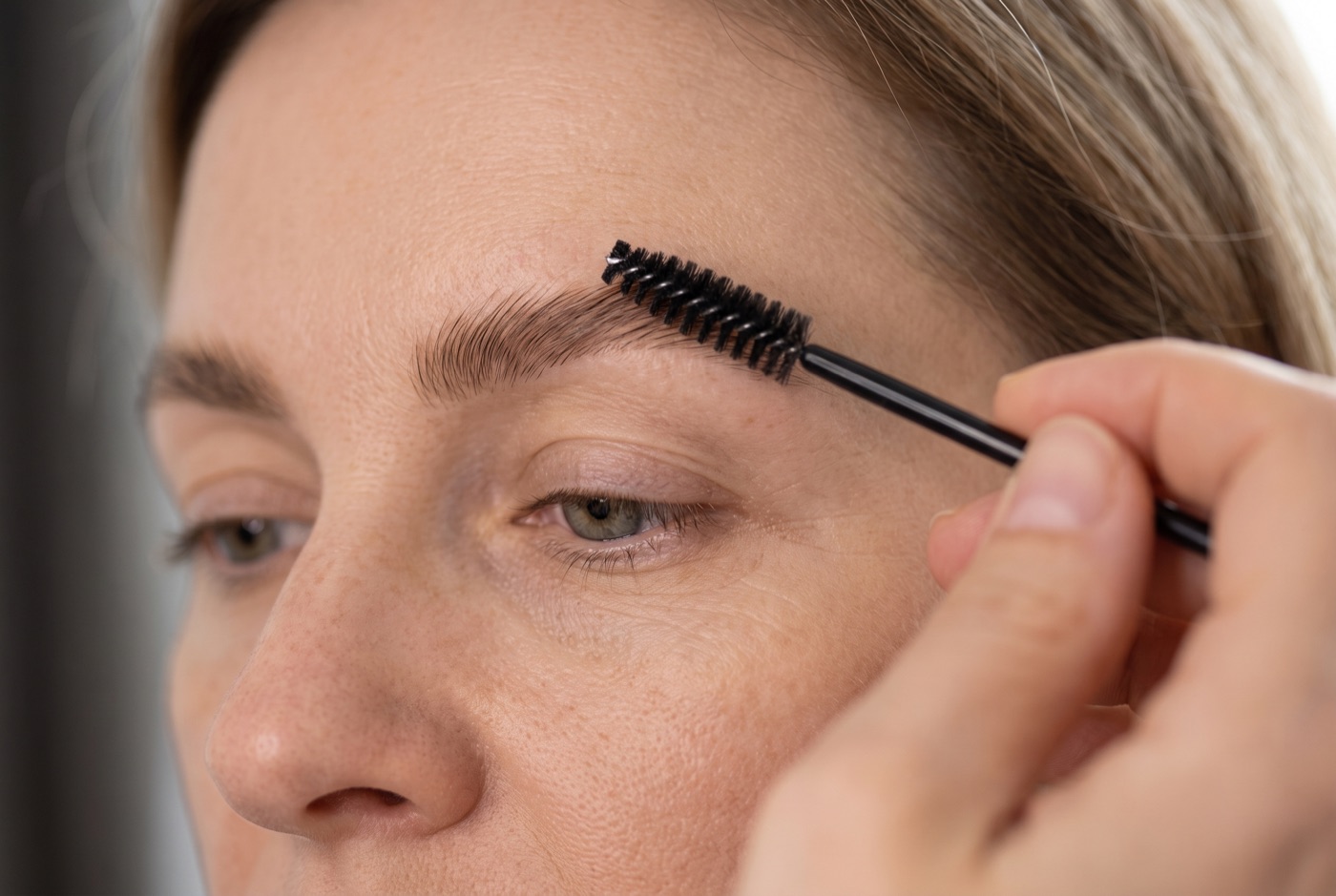
Most brows only need brushing
Before you fill anything, brush your brows up and set them. For most of the faces I see, that is the whole job, and it takes thirty seconds.