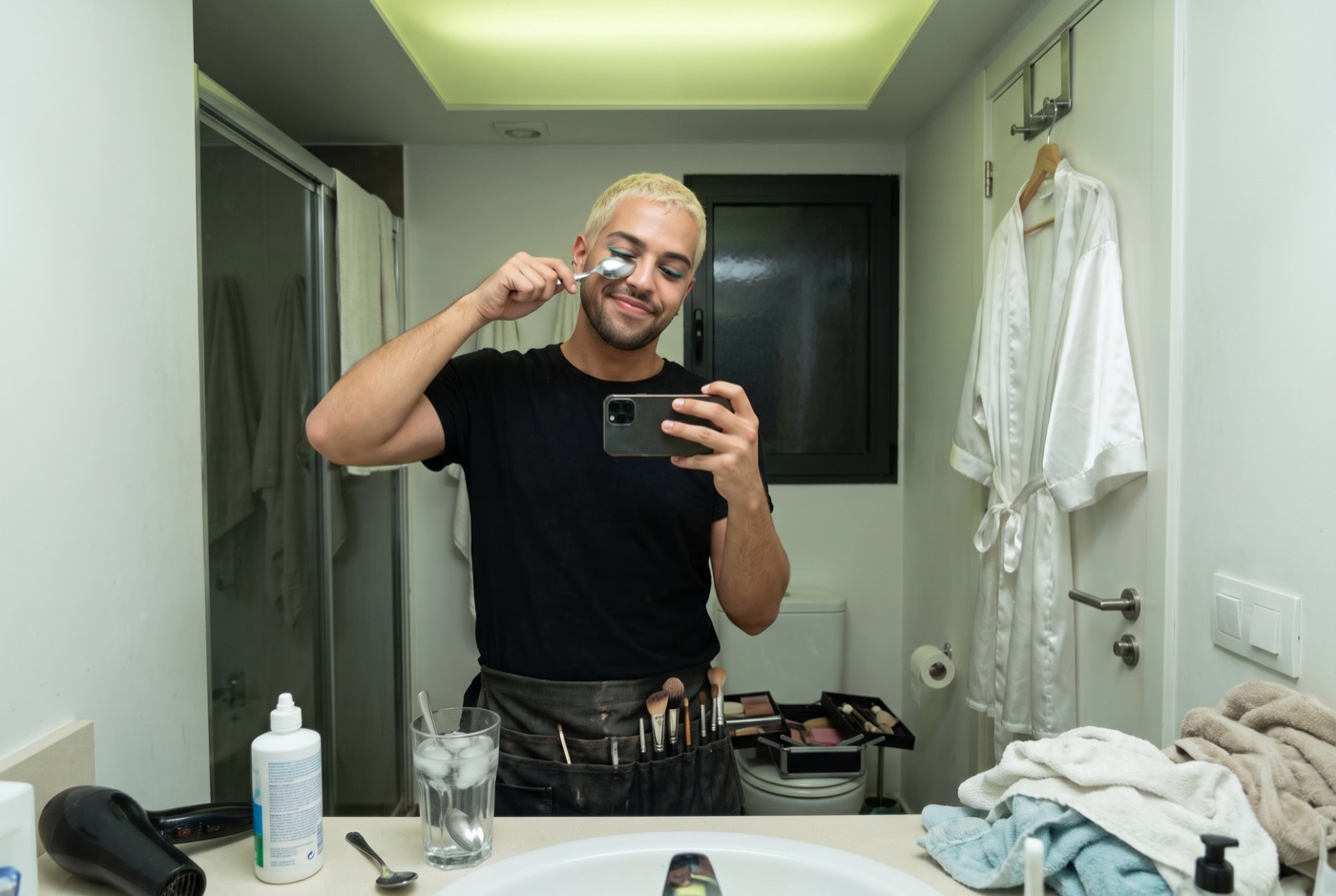
What can I use instead of an eye patch? A spoon
A cold spoon, two minutes of tapping, a drugstore caffeine roller and a concealer triangle get a bride most of the way by six a.m. When a patch still wins.
 Danny Rose
Makeup artist · New York
Danny Rose
Makeup artist · New York
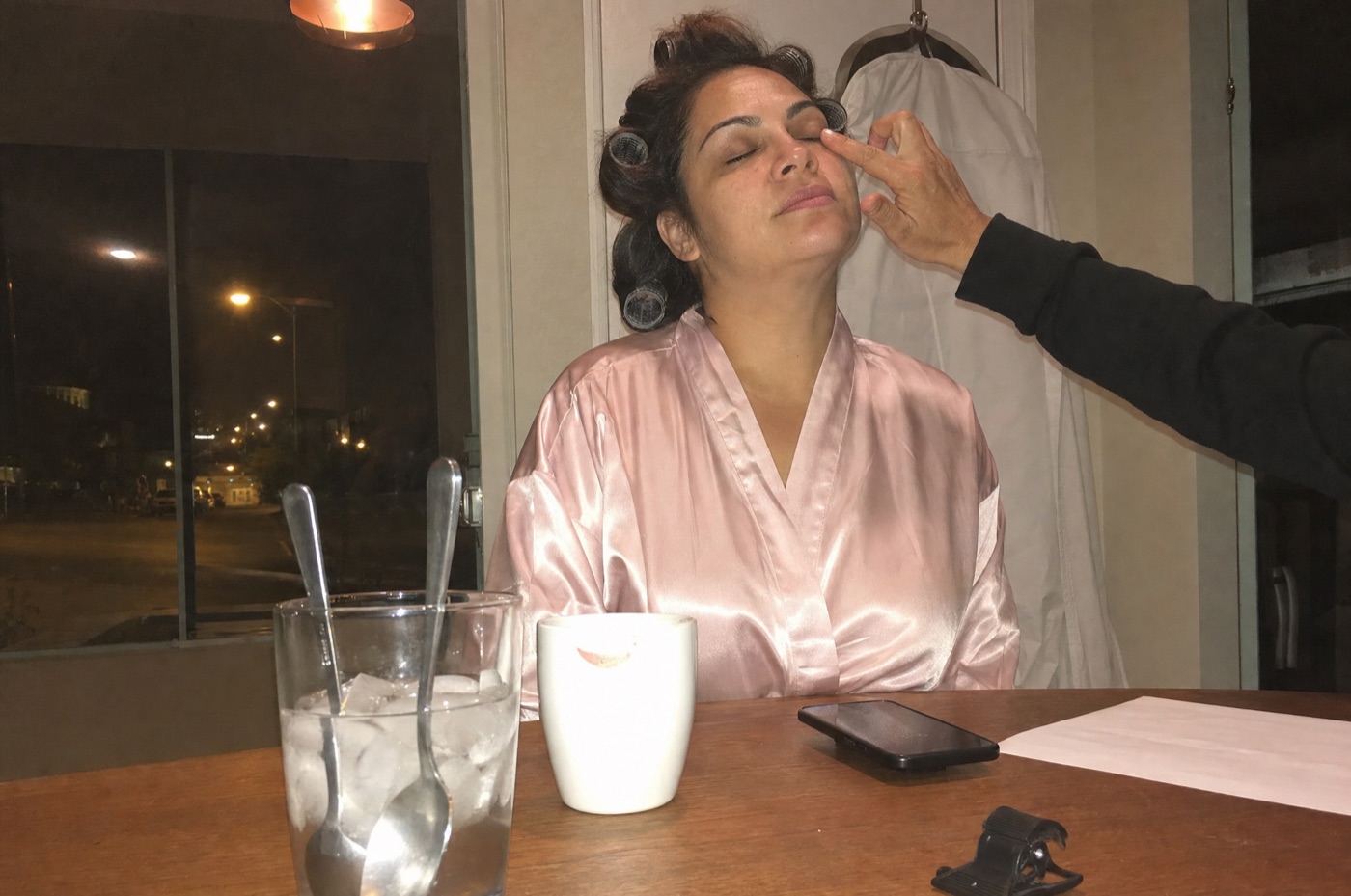
Five in the morning, a bride's bathroom, the flat overhead light every bathroom seems to have, and a face that went to bed at one after the rehearsal dinner. Puffy, slightly pink, photographer at nine. She looks at me: "I forgot the patches."
Short answer: cold, movement, time — and then the right shape of concealer. Two spoons in ice water, two minutes of tapping with the ring finger, a cheap caffeine roller, ten minutes sitting upright, and a concealer triangle instead of a crescent. That gets most faces most of the way. A hydrogel patch still wins when there are twenty minutes and a photo call — I will get to that.
Why "just cover it" is the wrong first move
Puffiness is not a color problem. It is a volume problem — a bit of fluid that settled overnight — and concealer does nothing to volume except make it lighter than the cheek underneath. A swollen under-eye also moves more when you talk, so anything on it creases faster. Every time a client shows me three layers of concealer on a puffy eye, the layers are the problem, not the eye.
So the first ten minutes go to making the swelling smaller — cold, movement, gravity — and only then does anything with pigment go near it. The sequence is the entire trick, which is why it is the first thing I ask about at a bridal trial, before a single product comes out.
You cannot cover a swelling. You can only make it smaller, and then cover less.
The no-patch routine, in the order I do it
Everything below comes out of a kitchen drawer, a freezer, and a drugstore. About twelve minutes, most of which she can spend with her eyes closed.
- Two teaspoons in a glass of ice water. Metal holds cold better than anything else in the house. After five minutes, press the rounded back of one spoon into the inner corner, hold for a slow count of ten, then slide it out toward the temple. Swap spoons when the first goes warm, about thirty seconds. Press, never rub. Three passes per eye.
- Two minutes of tapping with the ring finger. Very light, like a piano key you do not want to sound. From the inner corner along the bone under the eye to the temple, then down toward the ear, then down the neck. Twenty taps a pass, four passes. What it does underneath is not my field. What I see: the inner corner looks flatter after two minutes than after none.
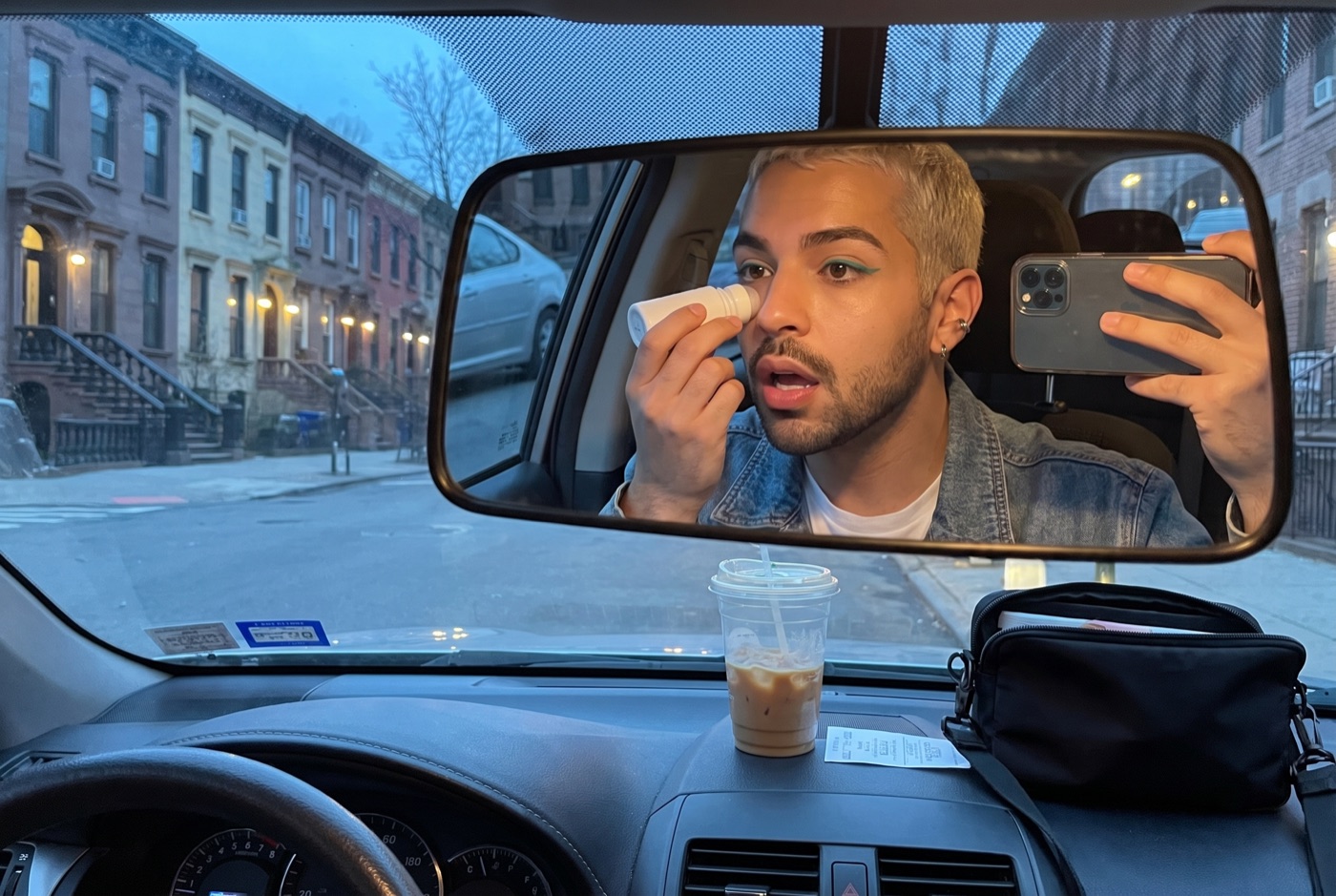
- A caffeine roller, cold. It lives in the freezer bag with the spoons. The metal ball does half the work — cold and pressure — and the gel does the rest, or so the label says. Inner corner outward, three passes, let it dry down. Gel on the fingers is normal; wipe it on the towel, not the eye.
- Ten minutes sitting up, doing something else. Head above the heart, lights on, hair being done, a glass of water. This is the step people skip and should not.
- Cold water, a splash, pat dry, then two minutes of nothing. Skincare thin. Anything still wet under concealer slides.
- Concealer in a triangle, not a crescent, and less than you think. Flat top under the lashes, point down toward the nostril. The entire shape is in where concealer actually goes, and on a puffy morning it matters more: a crescent along the swelling outlines it, a triangle pulls the light down onto the flat cheek. If the inner corner is blue rather than dark, a dot of peach first — that is its own post.
- No powder on the top edge. Press a little at the point of the triangle, nothing along the lash line. On a puffy under-eye, powder up there is a crease by the ceremony.
What I keep in the bag for mornings like this
Two things bought, one thing borrowed from the kitchen, and one jar — together they cost less than the rehearsal dinner.
Two teaspoons, free. Borrowed, always, and returned. I carry a pair in the kit for hotel rooms, where the spoons are plastic and useless.
Garnier SkinActive Clearly Brighter Anti-Puff Eye Roller, about $12. The drugstore caffeine roller with the metal ball. It is in the kit because it is cheap enough to lose, cold enough after ten minutes in ice water to do real work, and small enough for a bride's clutch at the reception. I will not make claims for the caffeine. The roller and the cold I can vouch for.
Dieux Forever Eye Mask, about $25. Reusable silicone patches — a patch that is not a patch. On their own they do nothing; they hold whatever serum you put under them against the skin for twenty minutes without it evaporating, and they come out of the fridge cold. For anyone who wants the ritual without the waste of a sachet — usually the bride's mother who "doesn't do patches."
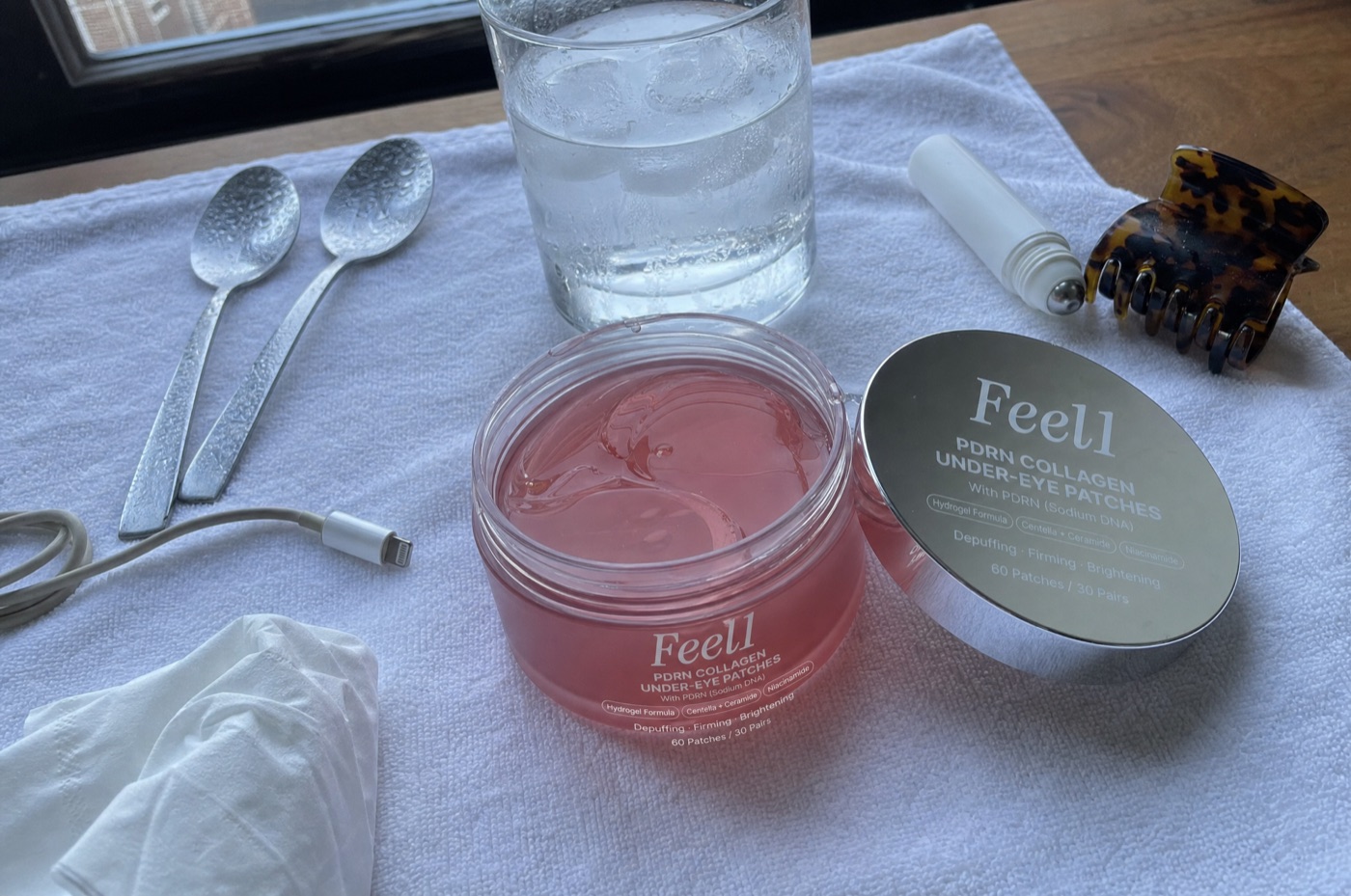
Feel1 PDRN Collagen Under-Eye Patches, $29.99 for 60. The honest part of a post about alternatives: when I have twenty minutes and a client with a 9 a.m. photo call, the patch wins, and this is the one. A flat frosted-glass jar with a chrome lid, thirty pairs inside, translucent pink hydrogel thick enough to stay on a face that is being talked to by a hairstylist. Cold from the client's fridge, fifteen to twenty minutes, and the under-eye is visibly de-puffed — more evenly than spoons manage — with a film of essence left behind that is the best concealer base I know. Roughly a dollar a pair, so a wedding morning does not hurt. These are the PDRN patches that live in my kit, for the mornings with time in them.
| Method | Time | Costs | Wins when |
|---|---|---|---|
| Cold spoons | 5 min | nothing | there is a kitchen and no time |
| Ring-finger tapping | 2 min | nothing | the inner corner is the problem |
| Caffeine roller, cold | 1 min | about $12 | a top-up in her bag at the reception |
| Reusable silicone mask over serum | 20 min | about $25 | she wants the ritual without the waste |
| Hydrogel patch, cold | 15–20 min | about $1 a pair | there are twenty minutes and a photo call |
When a patch still wins, and when nothing does
The honest ranking, from a lot of early mornings: cold spoons get you most of the way in five minutes. A patch gets you further and more evenly — but it needs the twenty minutes and a face willing to sit still. Photographer at nine and I arrive at six: patch. I arrive at eight: spoons, and I do not pretend otherwise. For the longer version of what a patch physically can and cannot do, the brand behind the jar in my kit has written a plain-spoken piece on it.
And three things none of this touches. Brown pigment under the eye is not swelling; cold does nothing to it, and the answer is one thin, well-placed layer. A hollow is bone structure, and you cannot drain a shadow. Puffiness that is new, one-sided, itchy, or does not go down by lunchtime is a doctor question, not mine. I can make it look calmer for a day. I cannot tell you what it is.
If you would rather practice the spoon-and-triangle routine once, with someone watching, before the morning it matters — that is what the one-to-one lesson is for. Bring your spoons. I am only half joking.
Frequently asked
Does the cold spoon trick actually do anything?
On a puffy morning, yes, visibly, and for about an hour — long enough to get concealer onto a flatter surface. It is cold and gentle pressure, nothing more, so it does nothing for brown pigment or a hollow. Metal beats a cold washcloth because it stays cold longer, and two spoons beat one because you swap the moment the first goes warm.
Do tea bags work instead of eye patches?
Cooled, damp tea bags are the original home patch, and they work for the same reason a spoon does: cold and moisture sitting on the skin for ten minutes. They are messier, they drip, and they tint the towel, so I use them at home and never on a client in a white dress. A damp cotton pad straight from the fridge does the same job.
Can hydrogel patches be reused?
No. Once they are off, they have given up their essence and picked up whatever was on the skin, and a second wear is a warm, floppy version of the first. If the waste bothers you — it bothers me — a reusable silicone mask with your own serum under it is the answer, or a jar of thirty pairs instead of single sachets.
Or let me do it
Reading about it is
slower than a lesson.
Two hours at your table, with your own products, and you hold the brush. $350 — and you keep the notes.
Keep reading
More from the journal
Most brows only need brushing
Before you fill anything, brush your brows up and set them. For most of the faces I see, that is the whole job, and it takes thirty seconds.
Why your foundation gets darker by lunchtime
Oxidation is real, it is predictable, and it is almost never fixed by buying a lighter shade of the same bottle.

Cloud skin makeup: what it is and how to get it
Cloud skin is the soft-focus base replacing glass skin — velvety, not flat, not shiny. How I build it in five steps, and the two powders that do it best.